JSC – Power Supply Module Manufacturing Unit
In the ever-changing landscape of industrial design, the evolution of factory architecture stands as a testament to the ingenuity and adaptability of human creativity. From the formidable brick structures of the Industrial Revolution, designed primarily for functionality and security, to the intricate blend of ornamental Art Deco and Modern styles in the early 20th century, factories have continuously evolved in response to technological advancements and the changing needs of the workforce. Today, as we navigate the challenges of a rapidly changing world, sustainability has become the cornerstone of industrial design, signaling a shift toward more humane and aesthetically pleasing work environments.
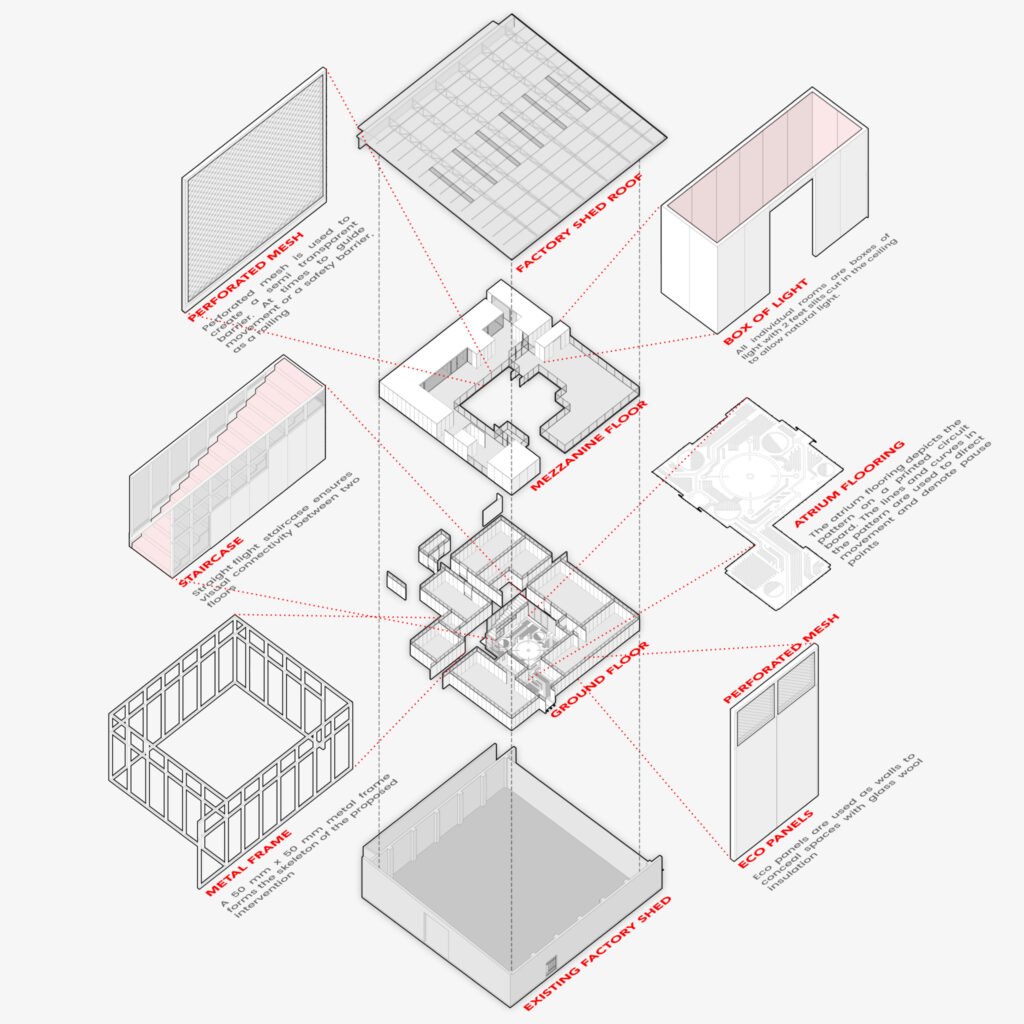
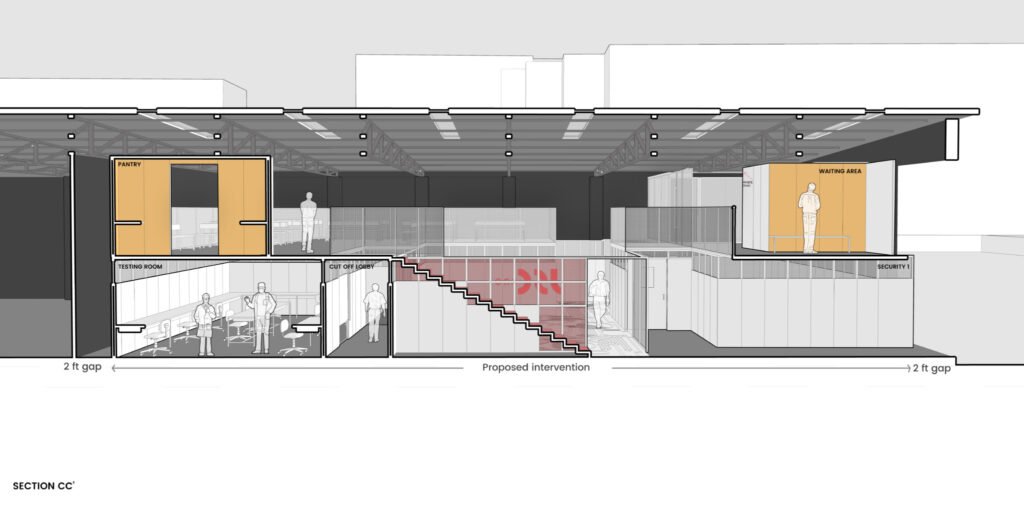
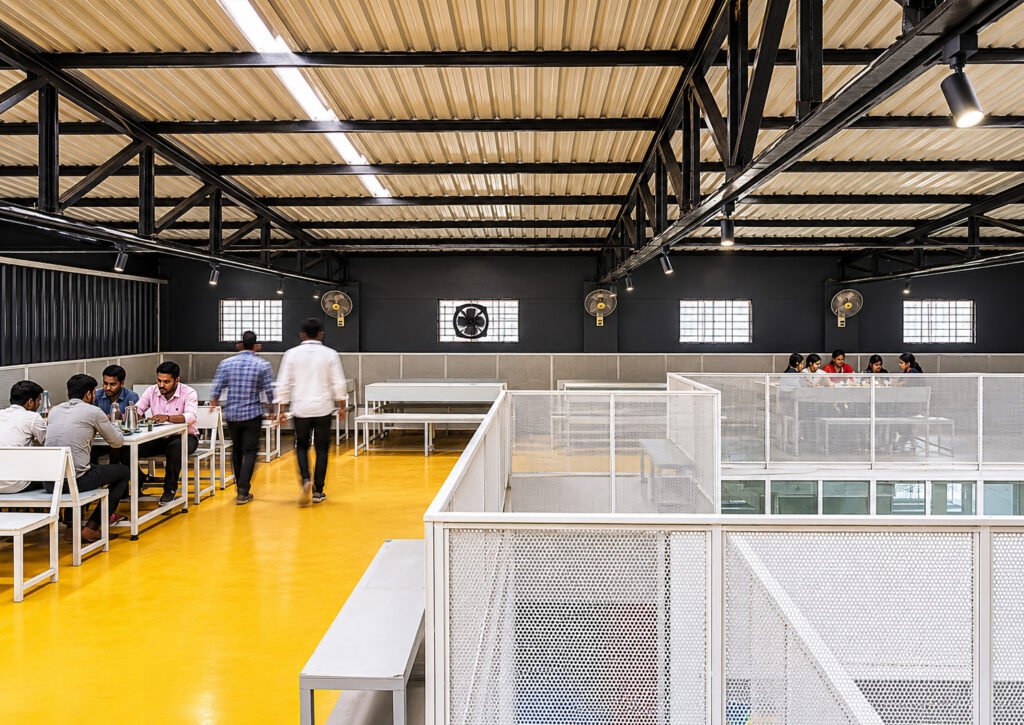
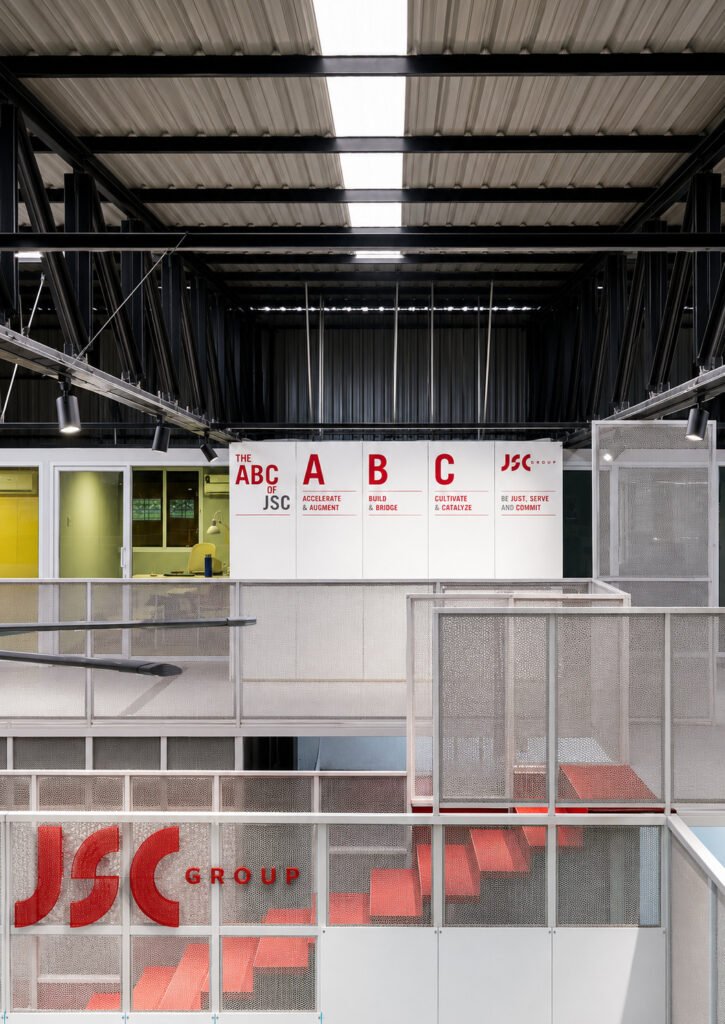
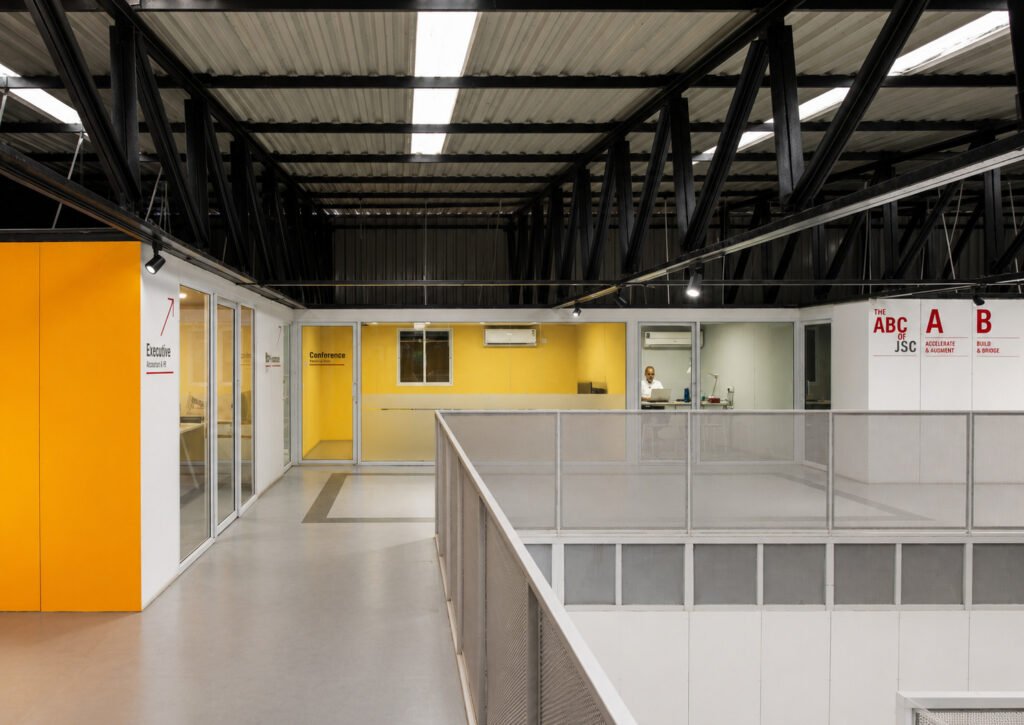
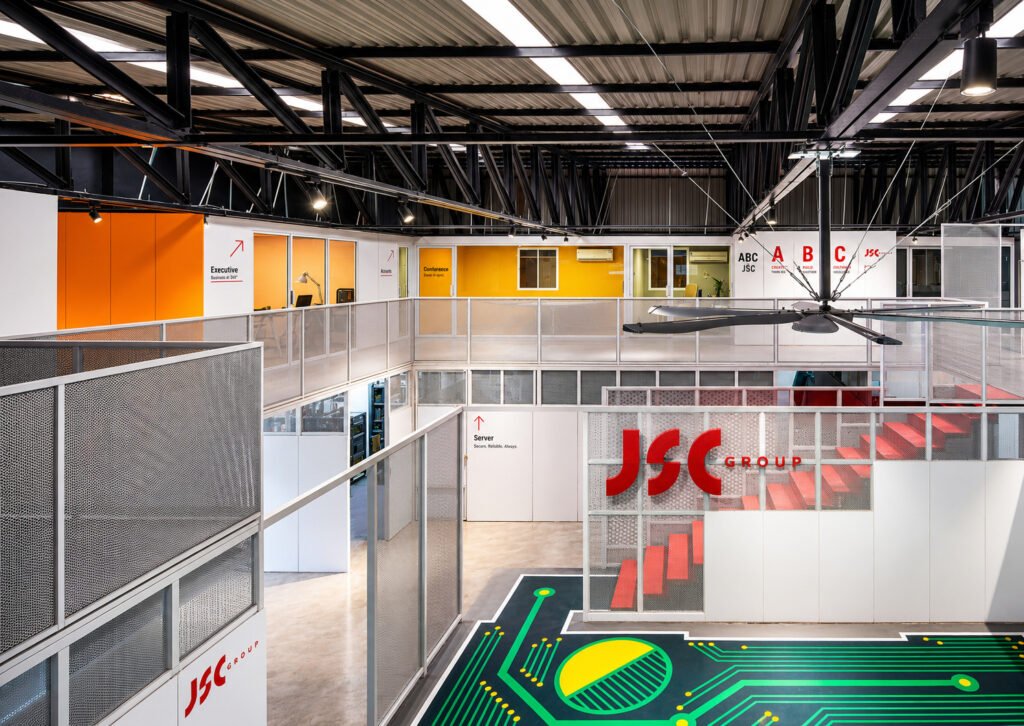
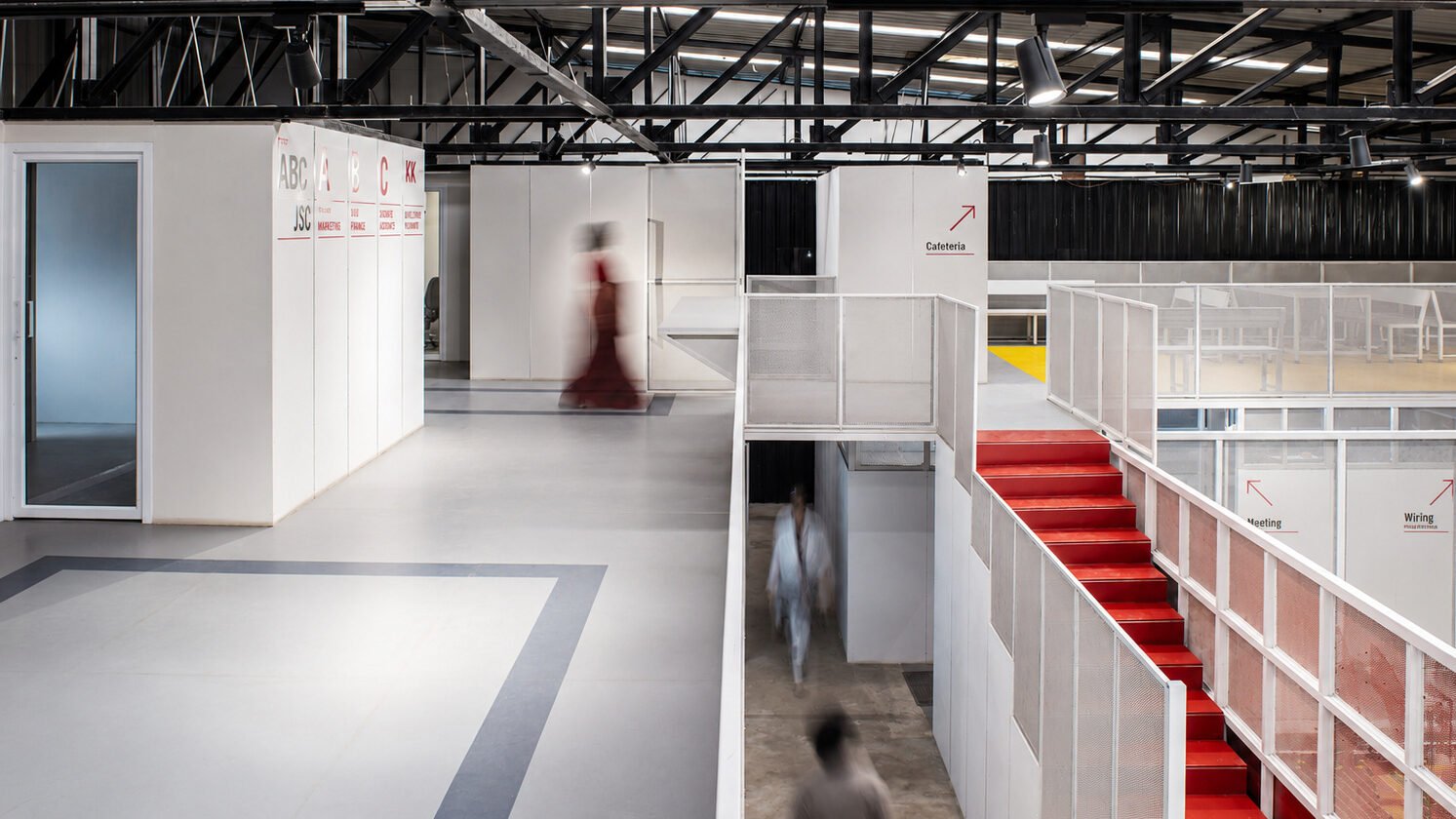
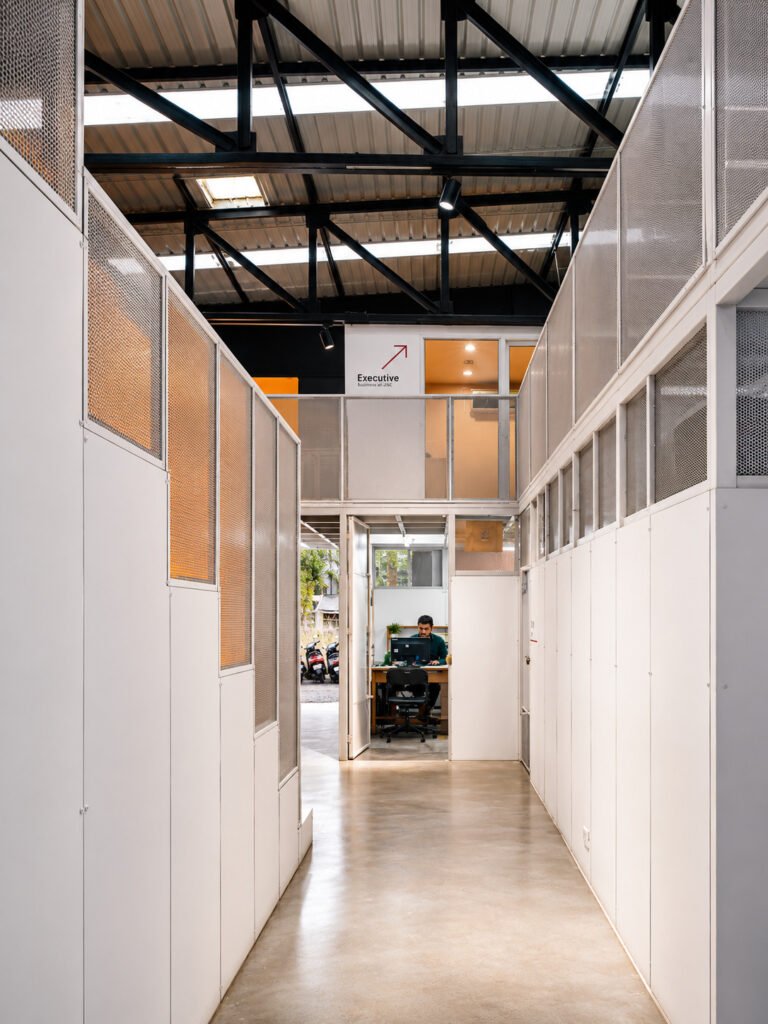
JSC’s industrial space, Pune, is where form meets function in a harmonious blend of creativity and efficiency. In this innovative design, inspired by the principles of minimalist aesthetics, the design deftly responds to the existing roof truss, maintaining its original form while infusing the space with a striking contrast of white hues punctuated by vibrant pops of color. The space, once a mundane factory shed characterized by a metal roof and truss structure, is now celebrated in its raw state, untouched yet seamlessly integrated into the modern vision of the project. The spatial design language of this project unfolds as a creative response to an initially unpleasing existing structure. Drawing inspiration from the seamless integration of a power supply unit within a master device, the proposed intervention sits within an existing block, embodying a commitment to functional harmony and architectural cohesion. By strategically offsetting walls and reconfiguring spatial volumes, a dynamic and adaptable environment emerges, transforming the underwhelming structure into a multifunctional canvas. The reimagined space not only addresses aesthetic concerns but also serves a dual purpose, acting as both a defined area and an innovative solution for housing ducts.
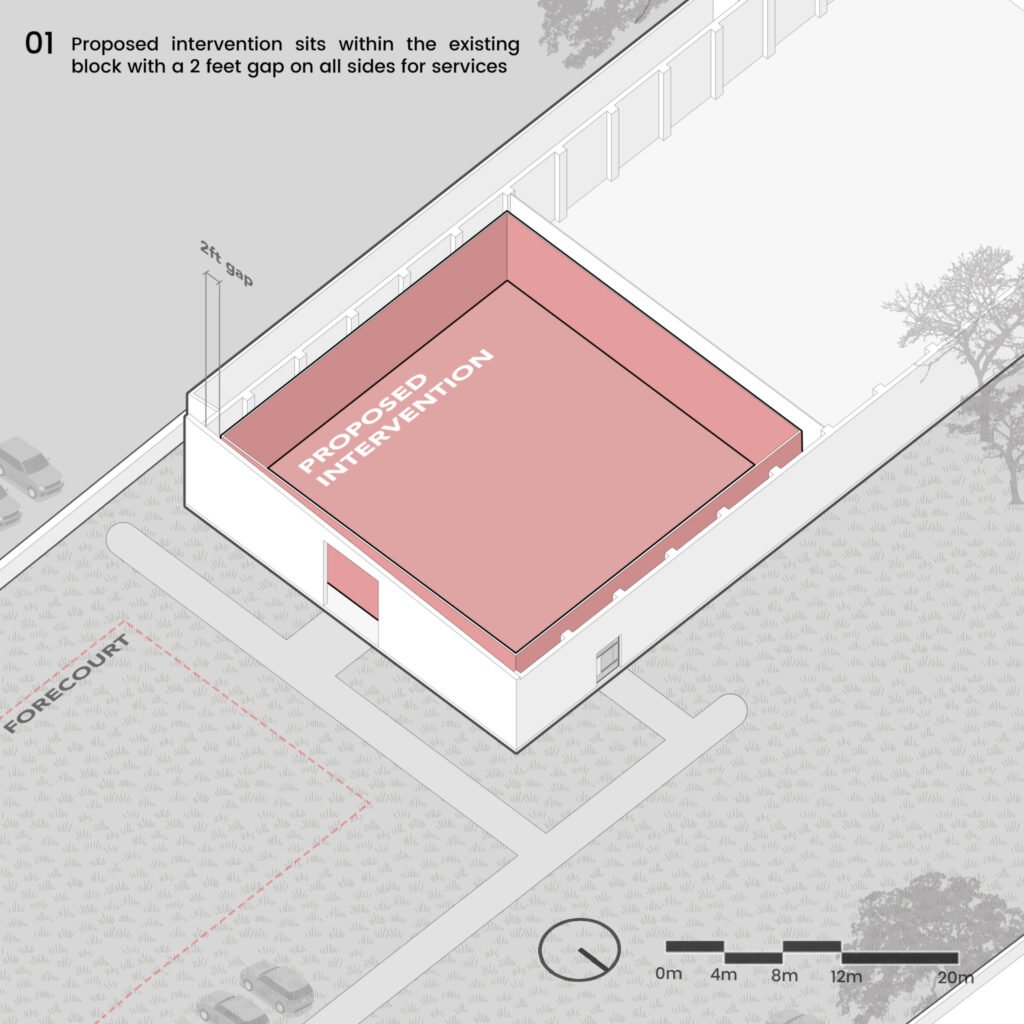
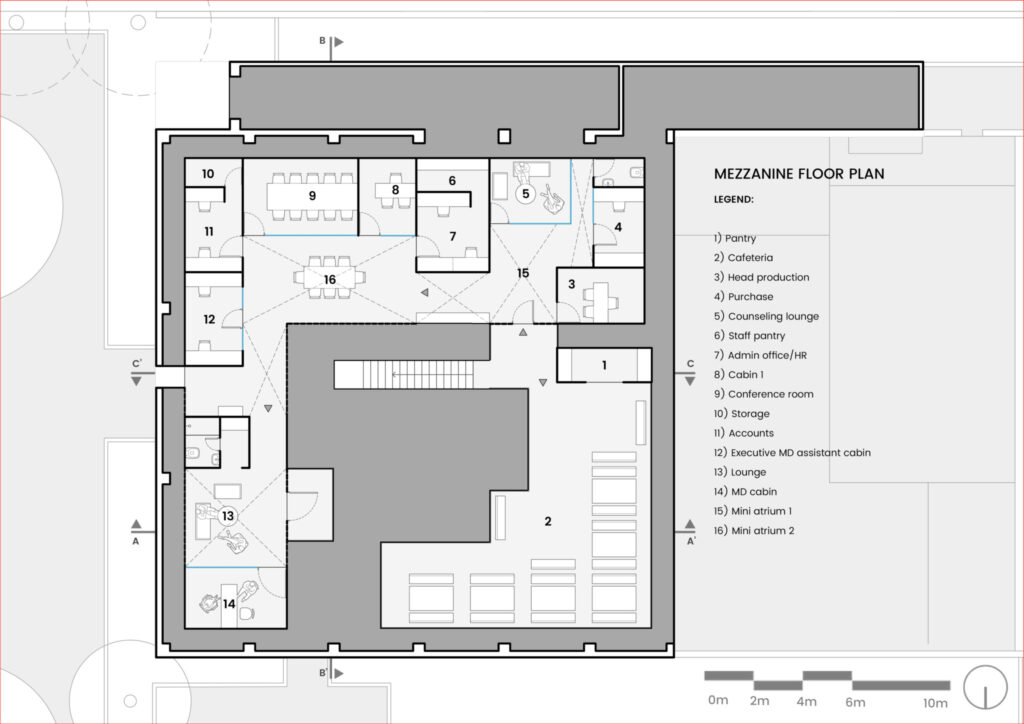
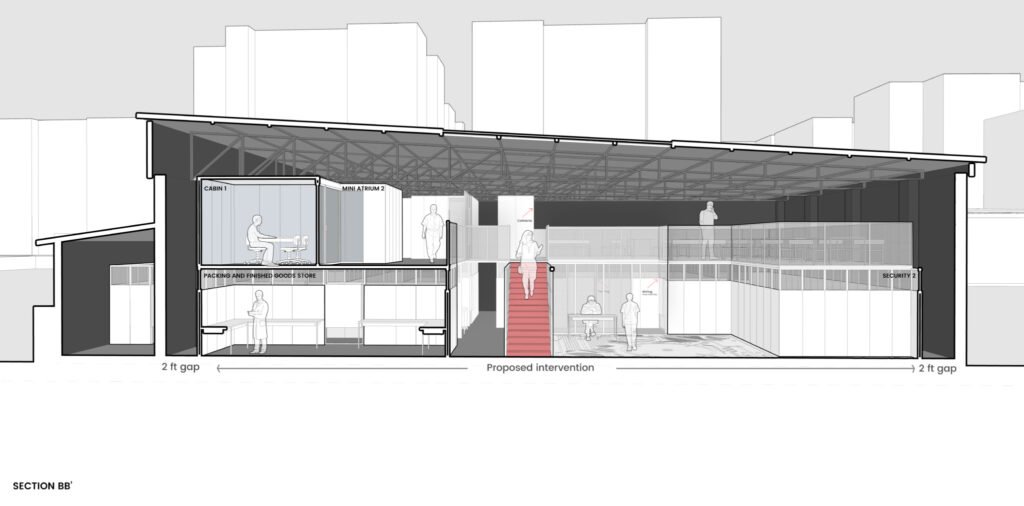
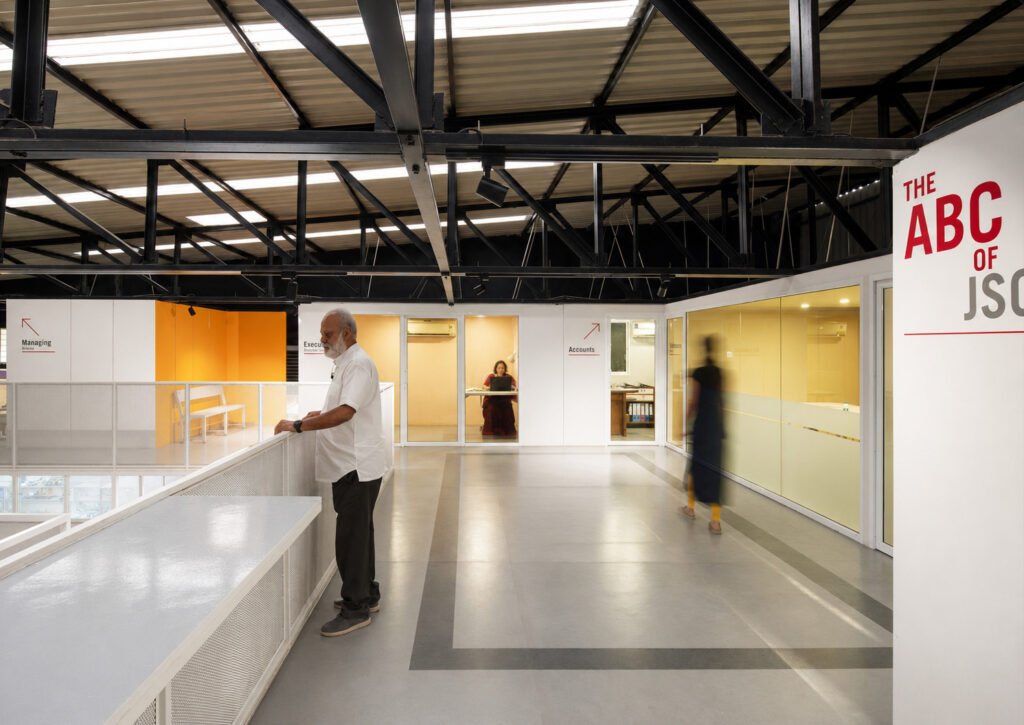
The two-floor layout is strategically planned, with the ground floor dedicated to heavy workshop areas and the first-floor housing office spaces for management. The offset positioning of both floors from the shed’s structure allows for the incorporation of essential elements such as conduits, plumbing, and electrical systems, ensuring a streamlined and efficient use of space. Prefabricated spatial elements contribute to the project’s efficiency, enhancing the overall design’s functionality.
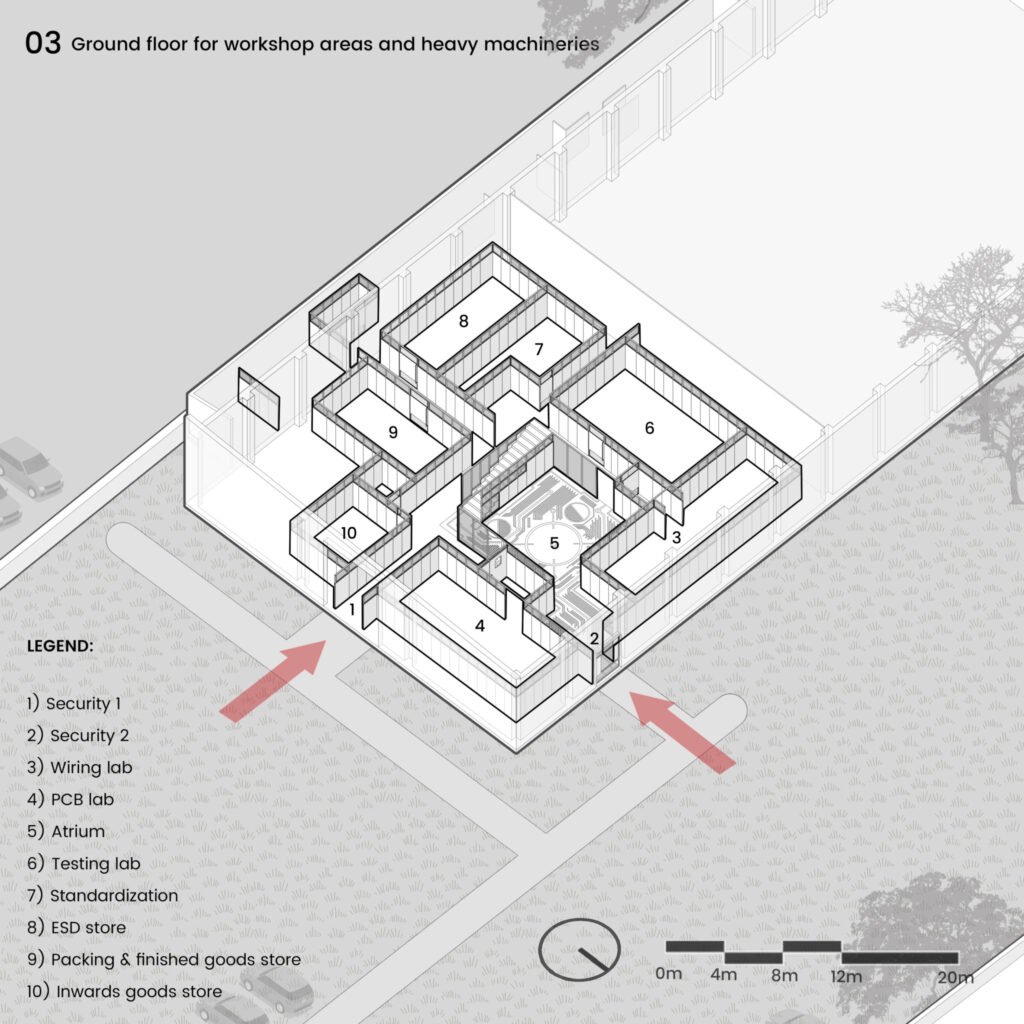
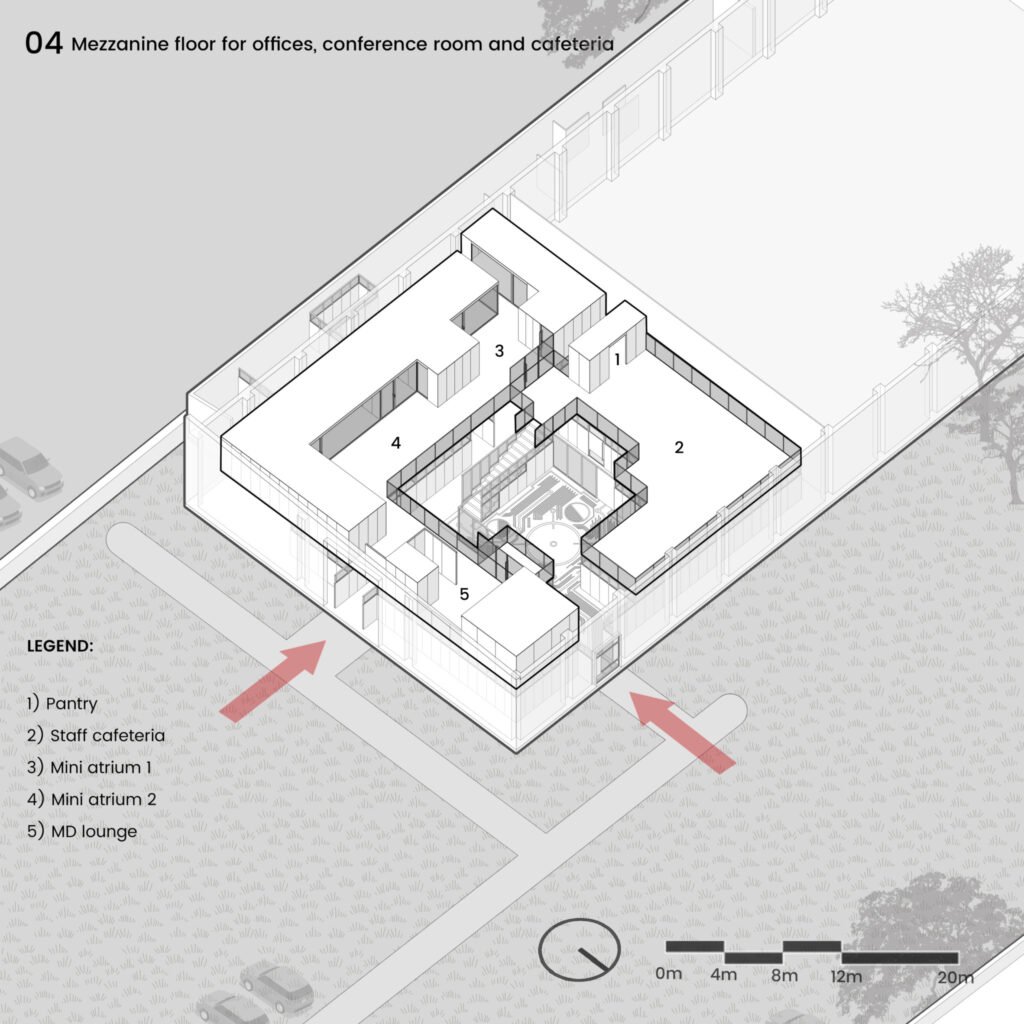
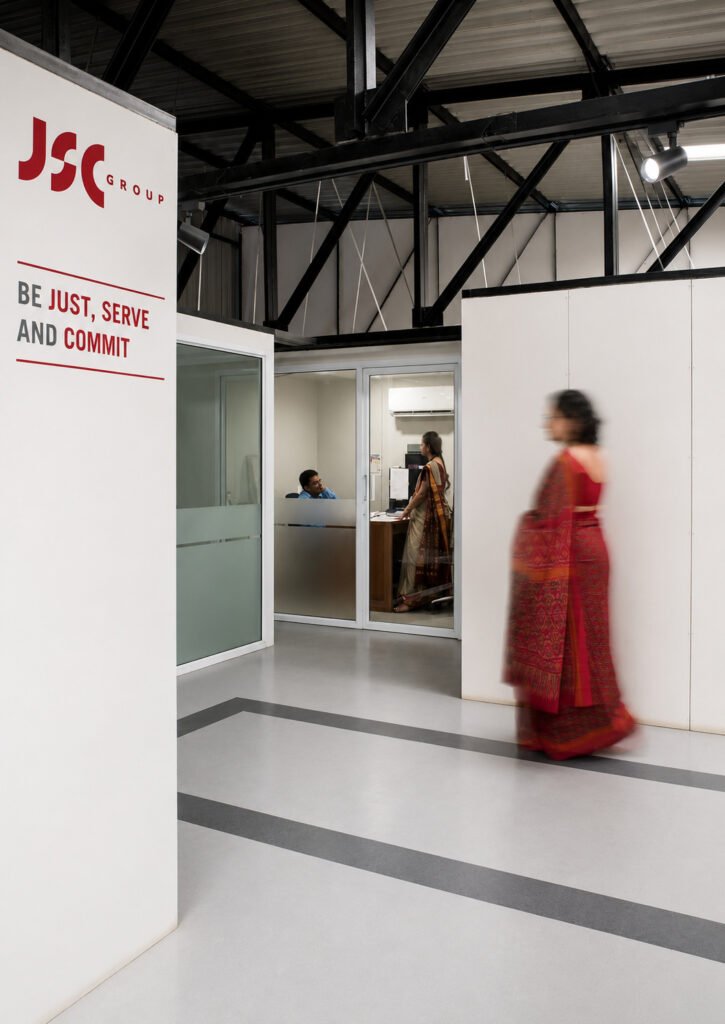
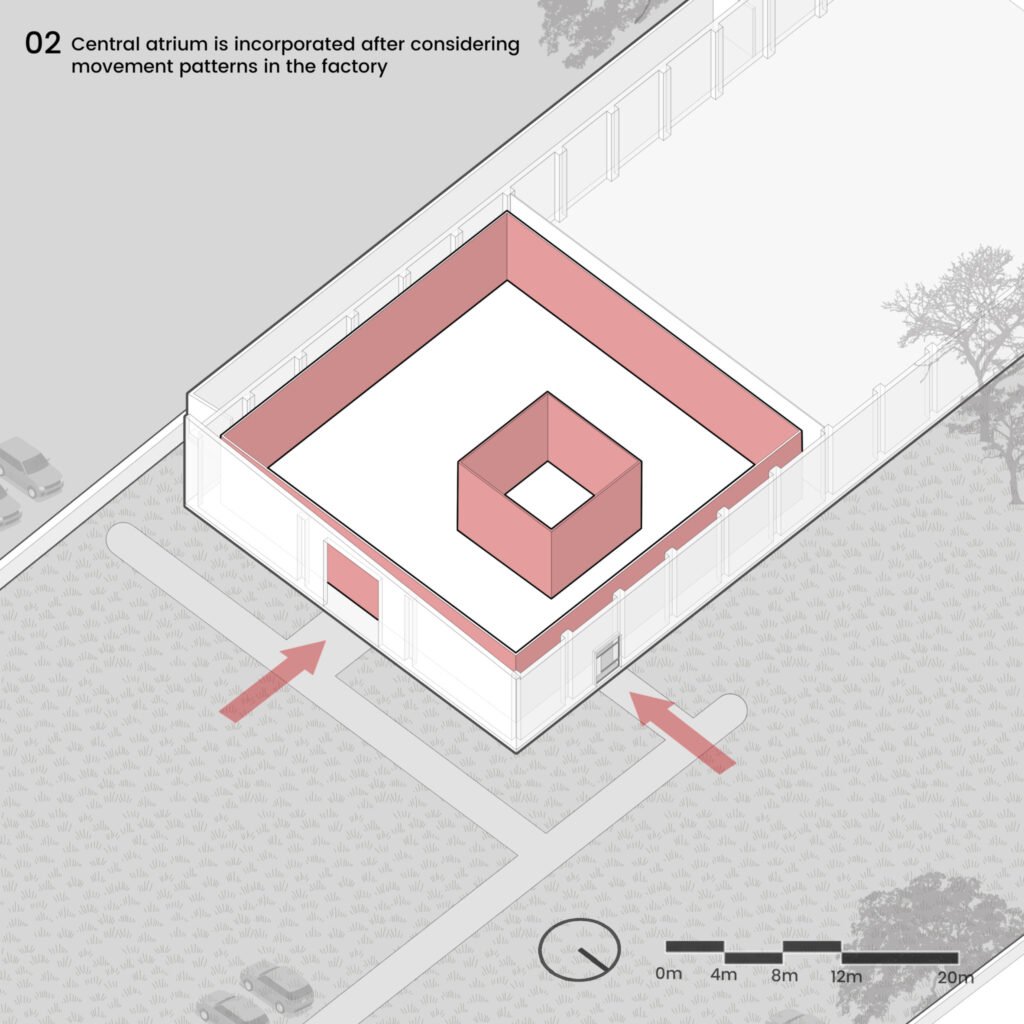
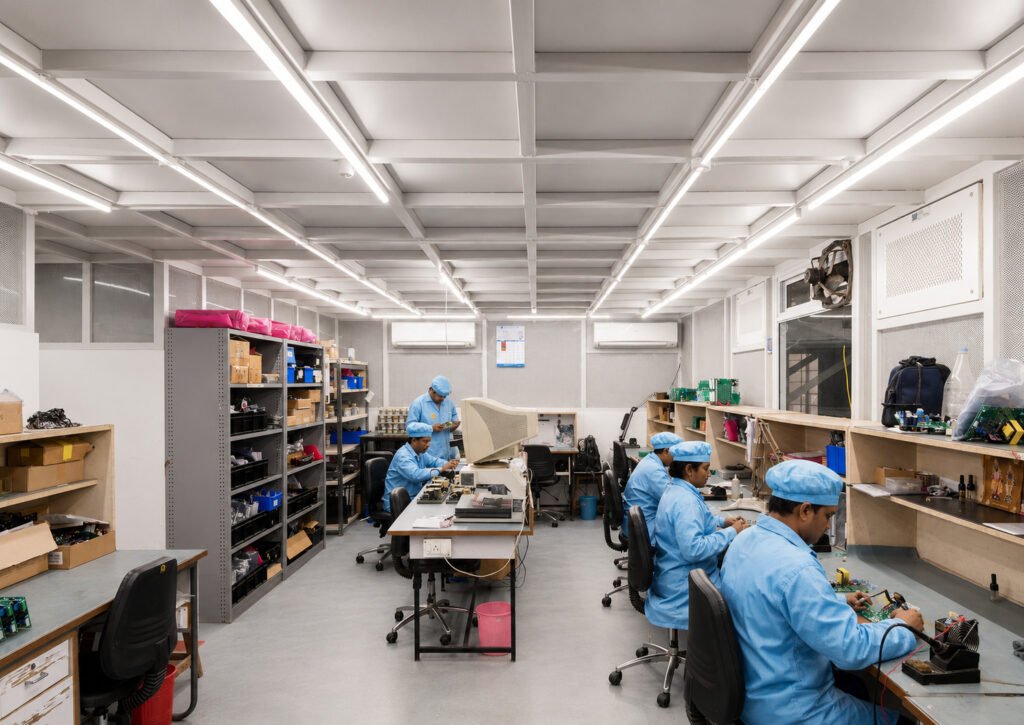
In this industrial space, the color palette was meticulously curated, with a predominant use of white, creating a sophisticated and timeless backdrop. Introducing the color white, a hue rarely associated with industrial spaces, becomes a groundbreaking departure from the norm. White acts as a canvas, reflecting light and creating an illusion of spaciousness, thereby revitalizing neglected spaces and making them more inviting. By repurposing the existing structure and incorporating durable materials, the design emphasizes functionality while maintaining an industrial aesthetic. The design of the space was driven by a keen focus on facilitating effortless movement and circulation. This led to the strategic incorporation of two distinct entry points: one tailored for machinery, meticulously positioned for efficient access to designated areas, and another catering to the staff’s daily activities.
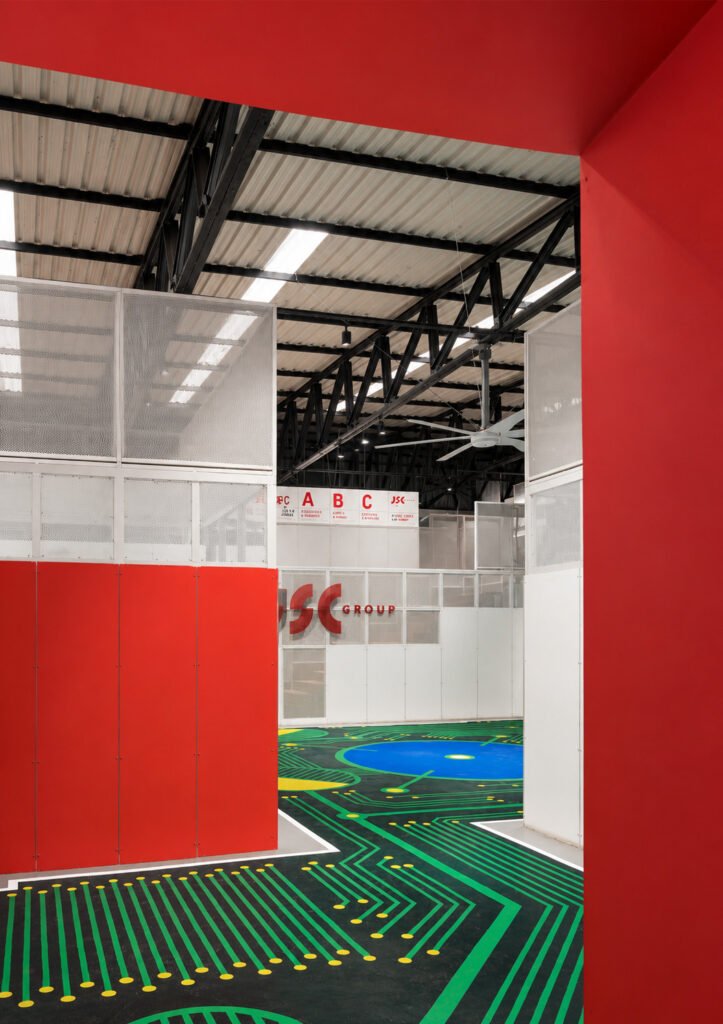
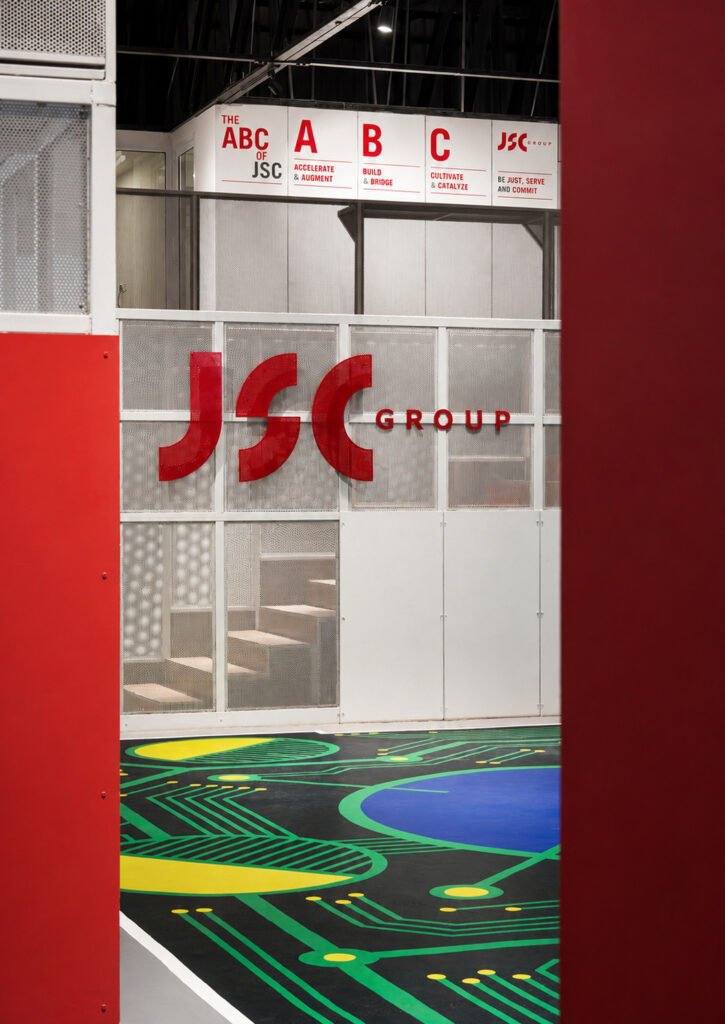
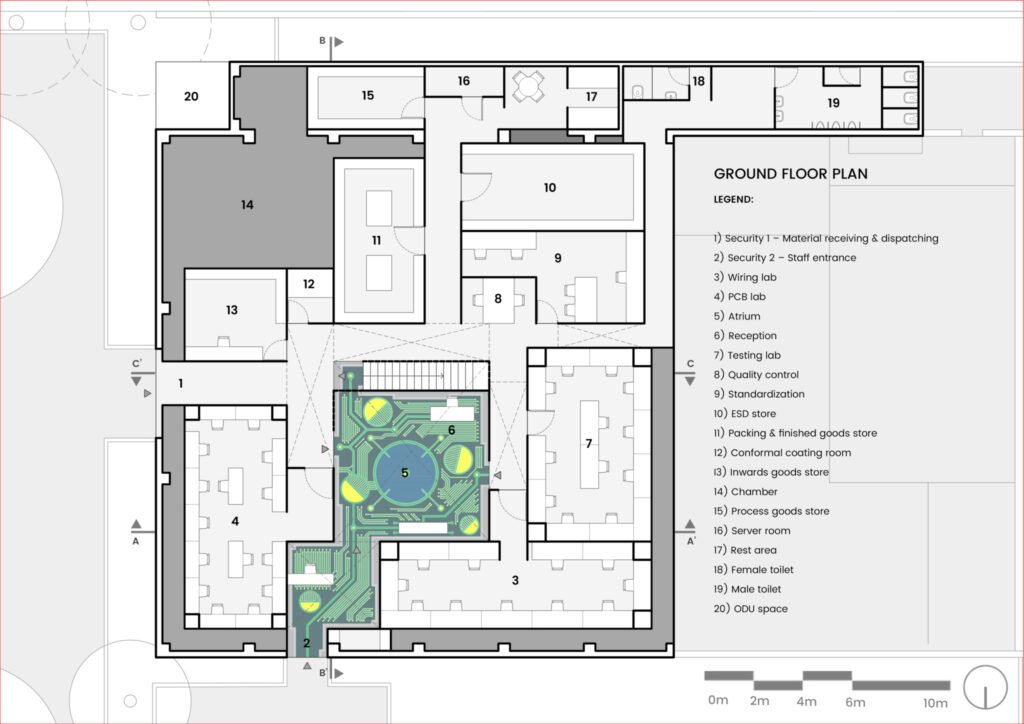
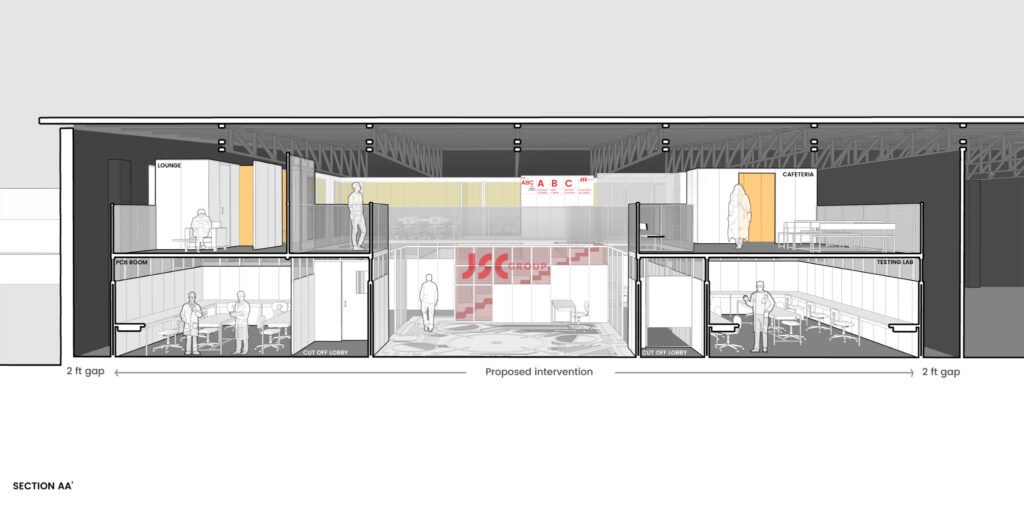
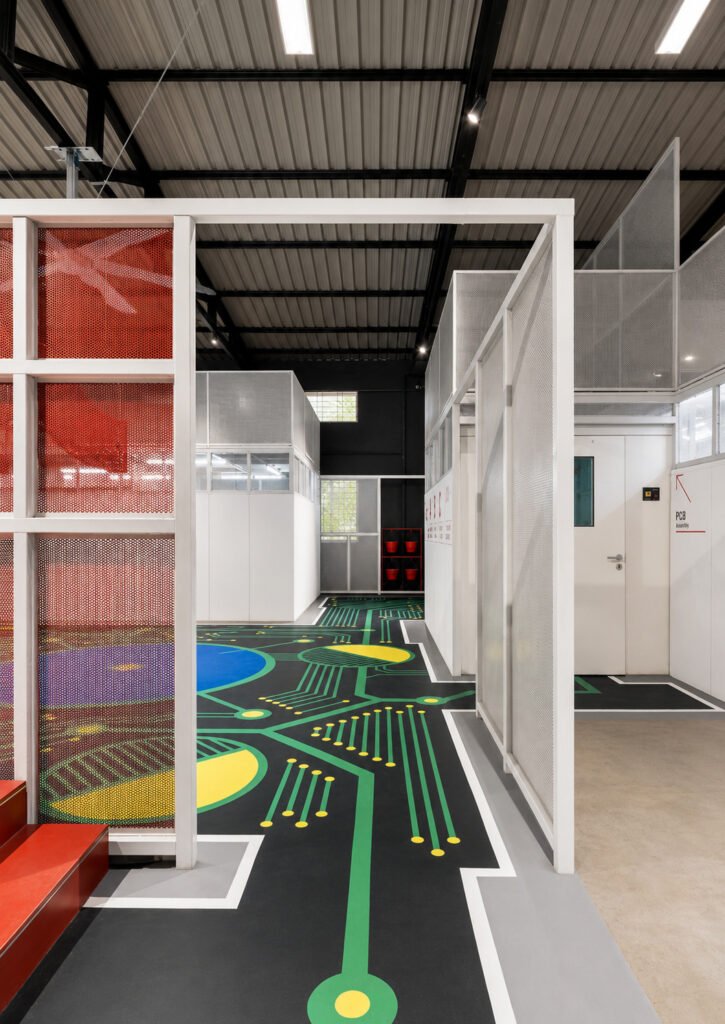
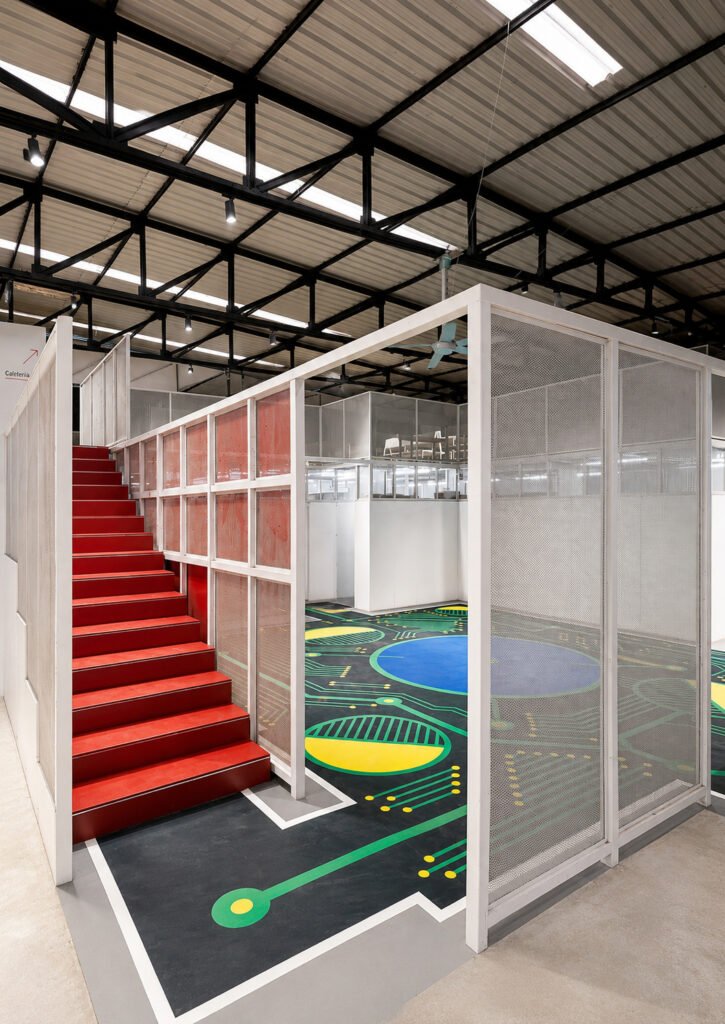
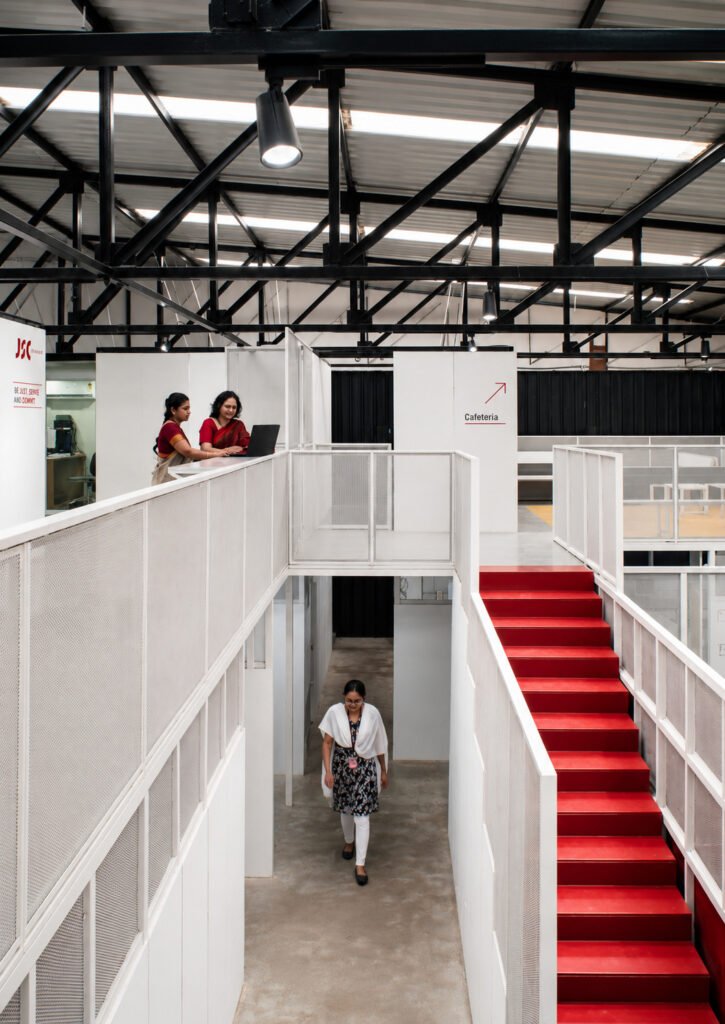
The design narrative is further enriched by the incorporation of graphical designs and wayfinding elements inspired by intricate circuit diagrams. These elements serve not only as functional guides but also as aesthetic focal points, enhancing spatial navigation and visual interest. The central space, with its double-height volume, stands as the heartbeat of the entire design. Around this central core, other spaces are meticulously organized, creating a visual symphony of unity and coherence. One of the most striking features of the design lies in the strategic use of the brand’s signature color, red, in conjunction with other complementary hues. This infusion of vibrant tones provides a stark yet harmonious contrast against the pristine white backdrop, adding depth and character to the overall aesthetic.