India is ranked 127 of 146 countries in the World Economic Forum’s Global Gender Gap index 2023, and women are at high risk of abuse both within their domestic environments and in the public realm. Even though women’s rights organizations, WHO and UN are publicly raising awareness, progress for women’s security and rights is still moving very slowly. In order to help Indian women achieve equal rights, the design of public spaces and urban infrastructure must make cities safer for girls and women – thus allowing them to travel safely from their homes to schools, work places or social events.
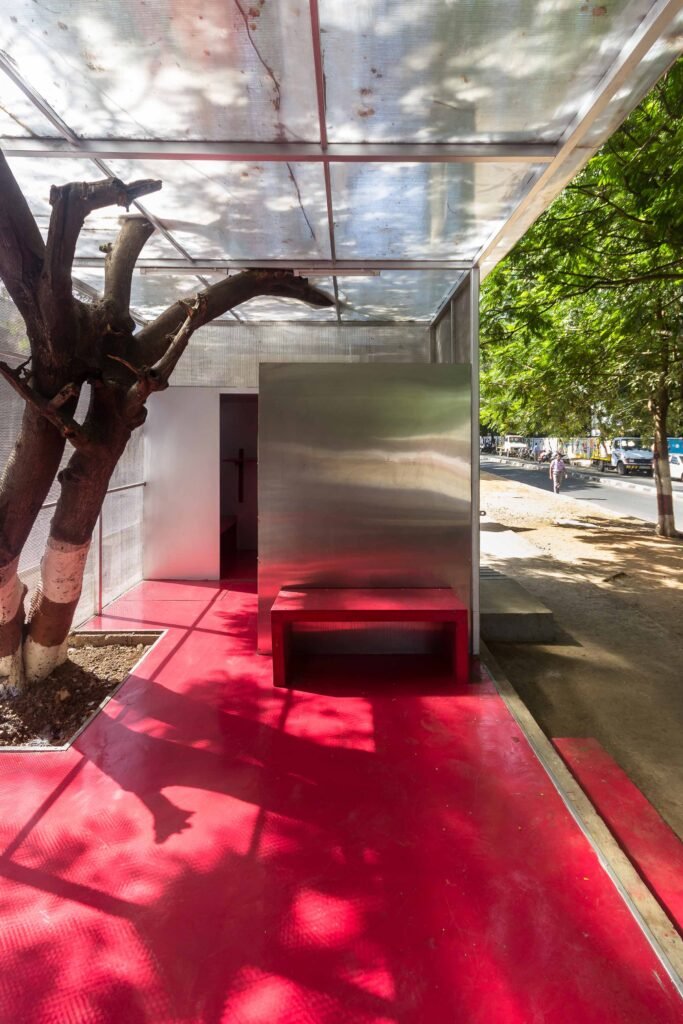
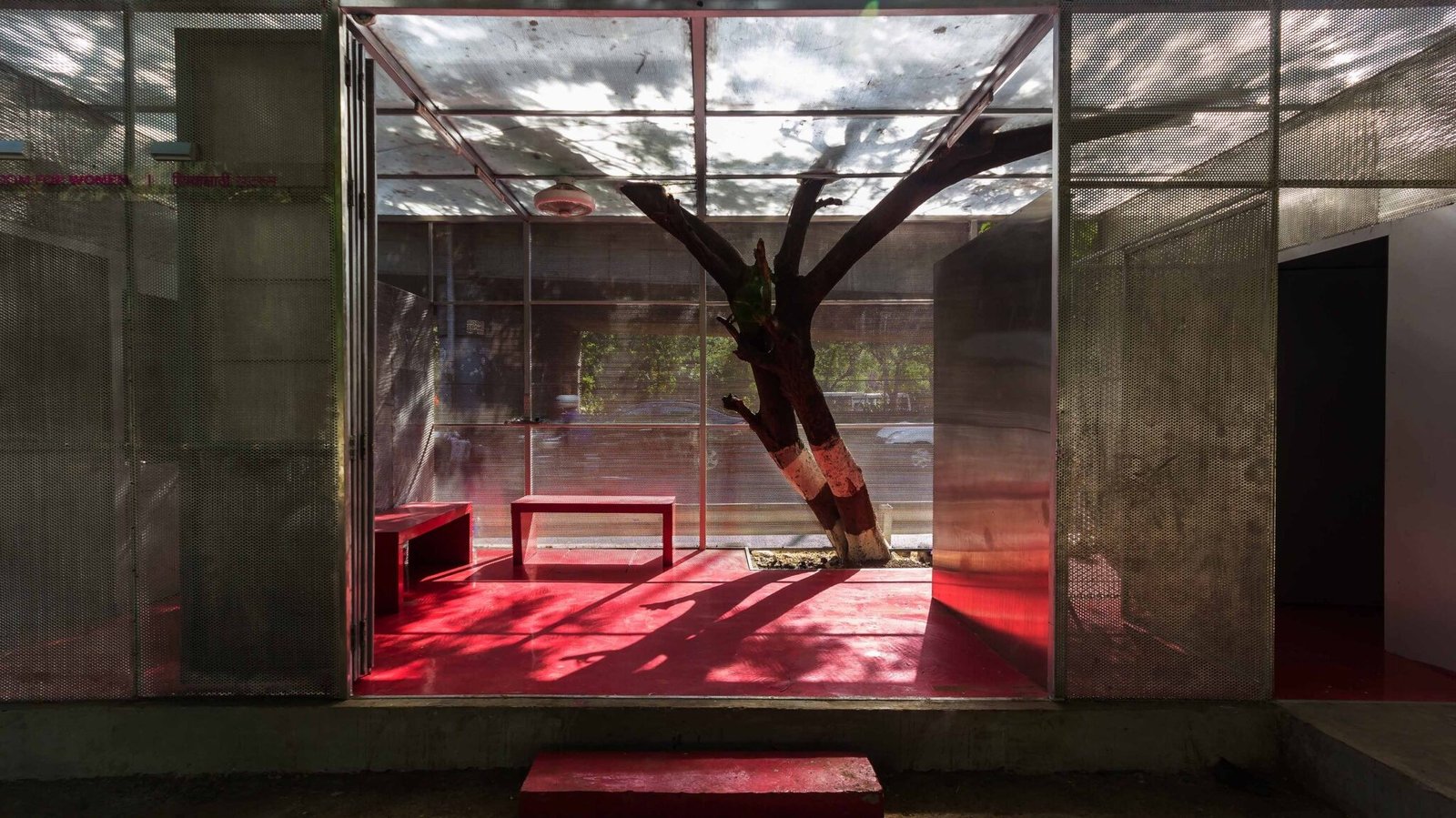
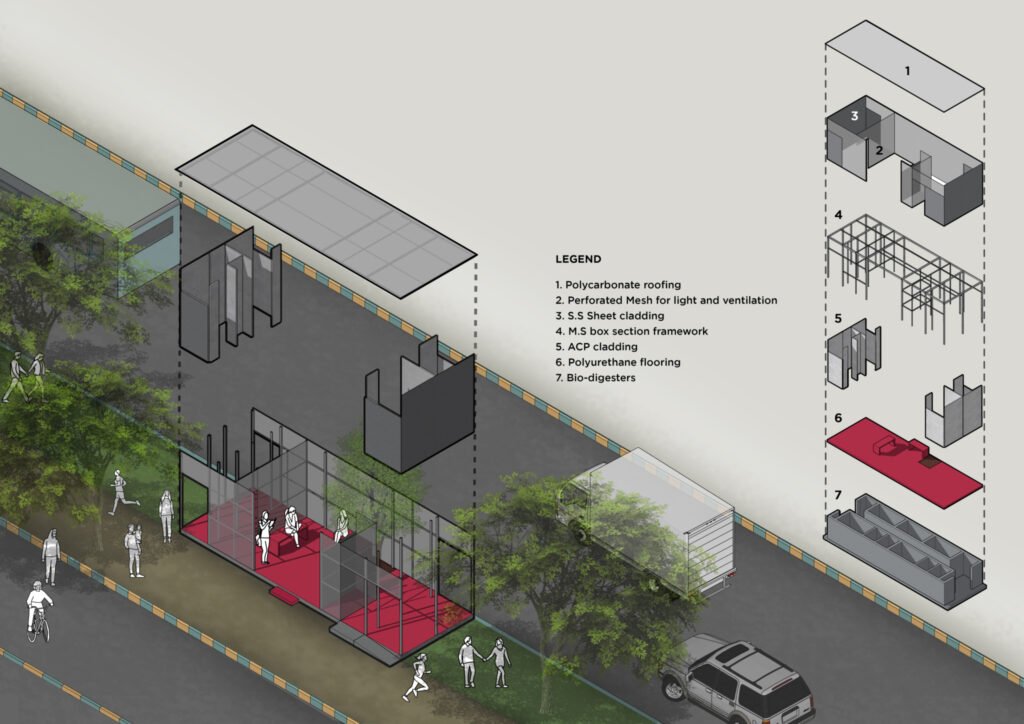
The design of the restroom has been conceptualized around a tree for two reasons. One to express the idea of integrating nature and context in the built form and using its characteristics to protect from climate. Secondly the shade of the tree protects the garden below from the sun allowing filtered light, and then it only needs a transparent cover to protect from rain. This intervention helped to maintain the light quality, as exactly it was when the site was empty. As a result of this intervention during the day the natural light fills up the box filtering through the trees and at night the box lights up its surroundings.
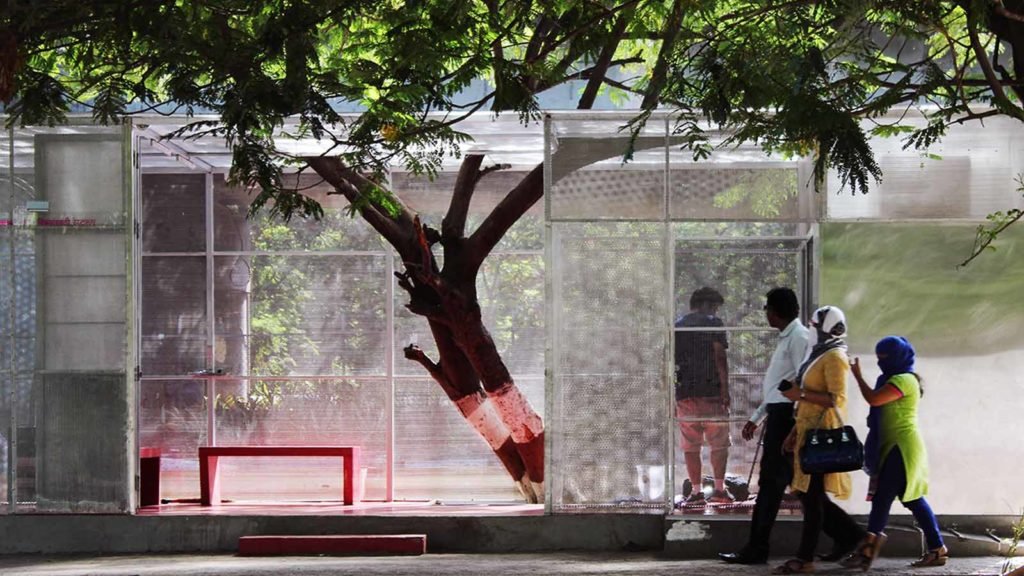
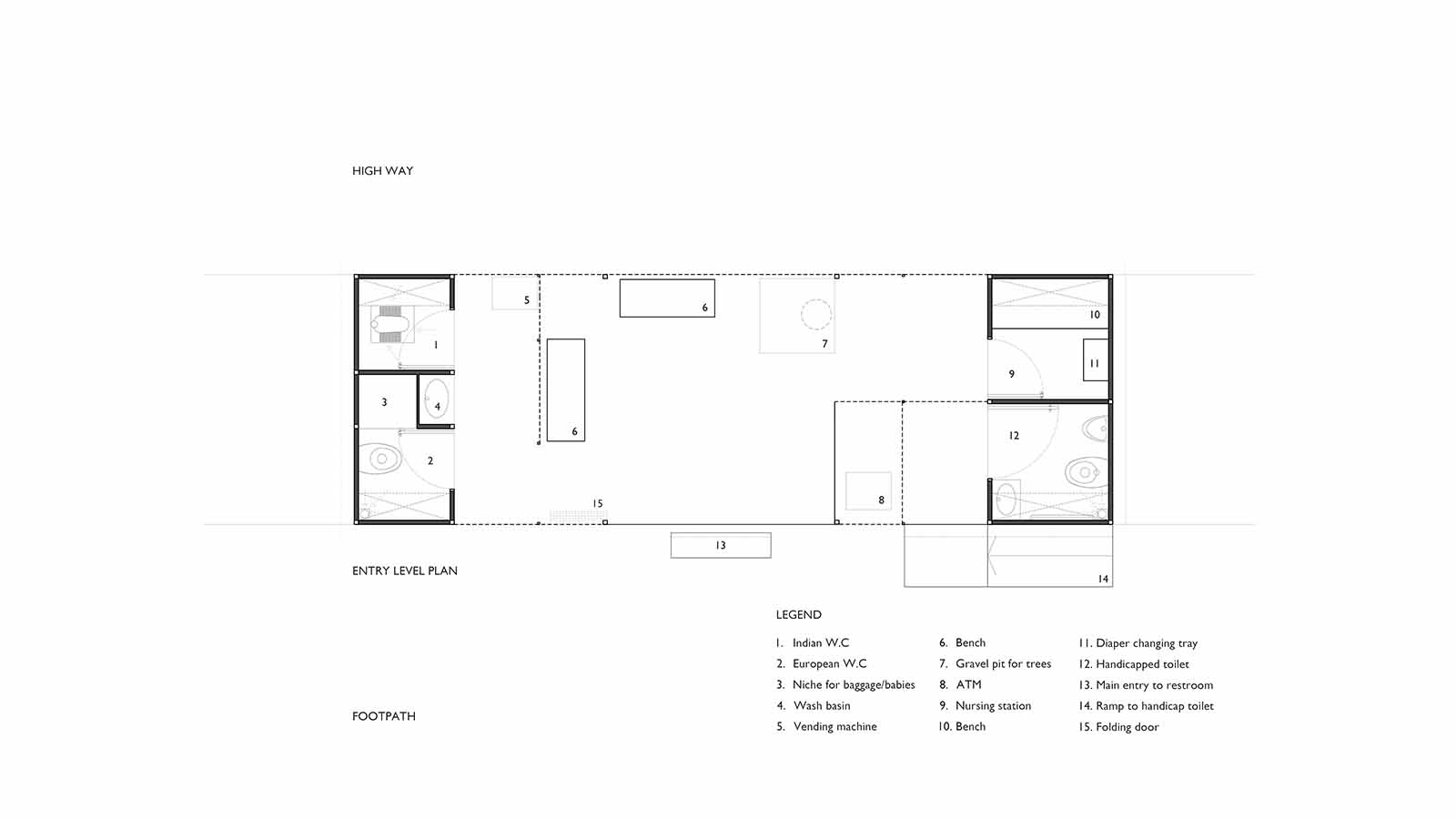
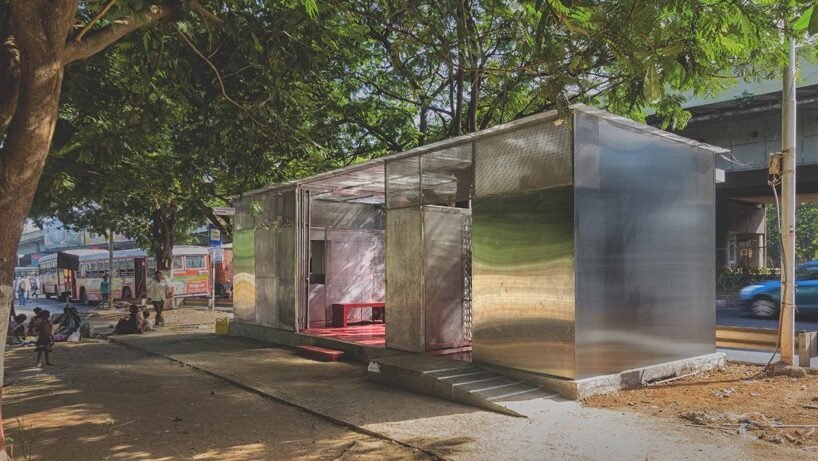
The Restroom for women measures 10’ x 30’ that creates a safe, sanitary social space for women in Mumbai. The space combines sanitary toilet functions in private booths with a semi-private social space in which women can sit, rest and recover. The social space is also a free gallery to display art for amateur artists, a place for lectures and awareness campaigns, celebrating festivals, seasonal activities, and events.
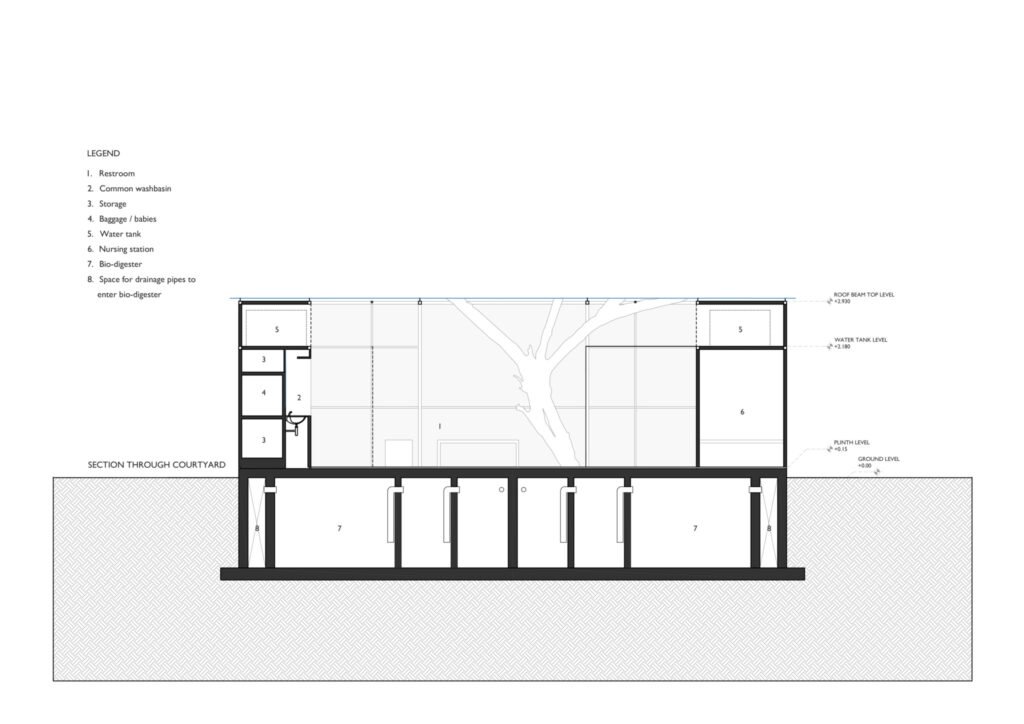
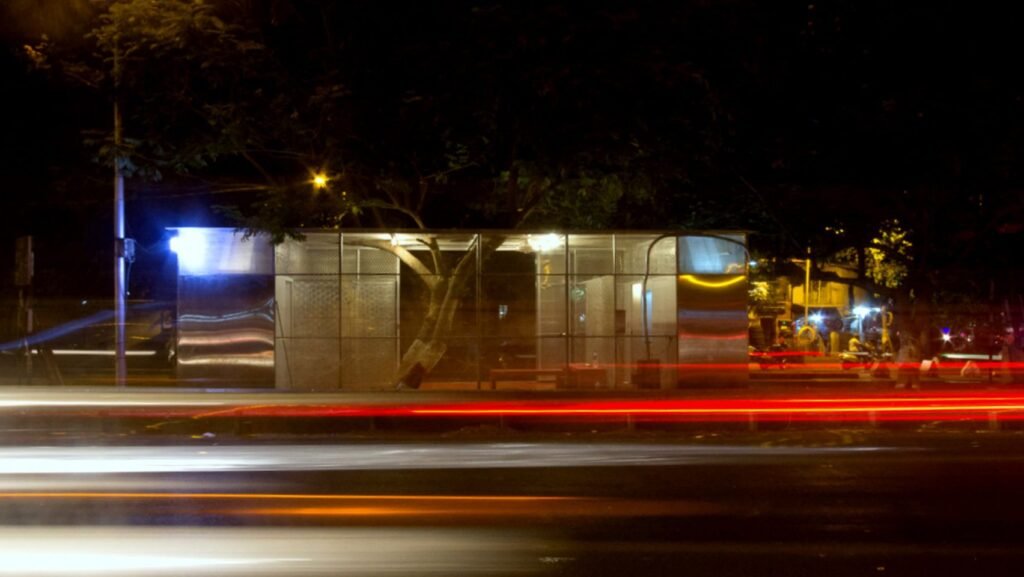
The restroom is built with low-cost, lightweight materials and a semi-transparent roof allowing natural light into space during daytime and at night, it glows from within and lights up its surroundings making it always approachable. The walls are slightly perforated to create natural ventilation, for creepers to grow on them and for the sunlight to pour in. Its transparent nature allows it to be illuminated by the sun during the day.
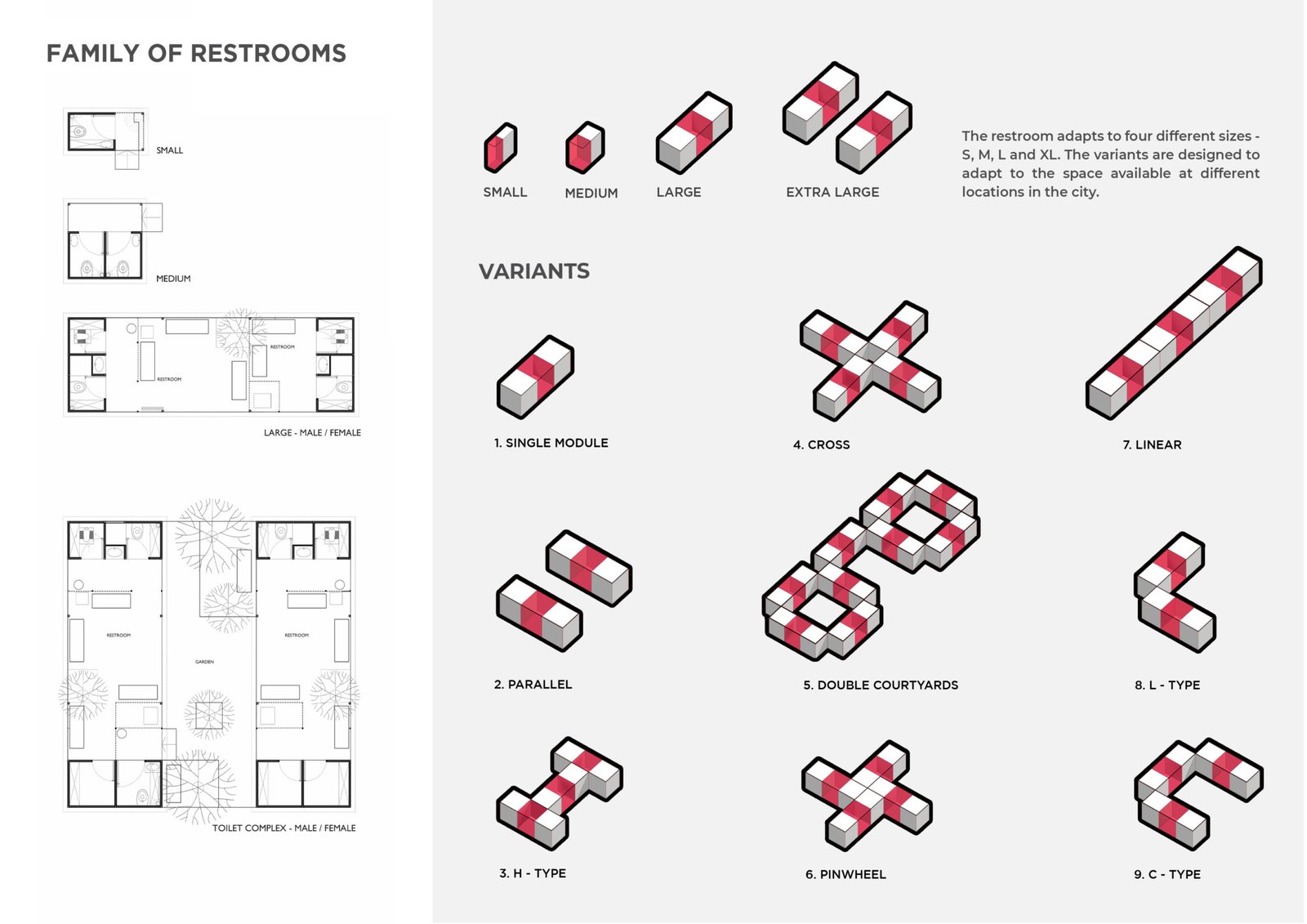
A 70% of the total area of the restroom is open to the citizens for various activities and events in the center, flanked with the toilet blocks and other facilities on either sides of it.
Most often than not, the thought of going to a public toilet is unpleasant, to say the least; it is to be avoided unless there is no way out. For many, it is a necessity and not an option. In the book titled ‘Why Loiter? : Women and Risk on Mumbai Streets’, the authors express through factual data, that over and above the lack of toilets what deters women from accessing and claiming public spaces as their own is the disappointing condition of the ones that already exist: unhygienic, unkempt, unsafe, uncomfortable, grossly inadequate and thus inaccessible. The book correctly identifies that there is no provision for the special needs of women, that their requirements to use the facility are different from that of men. The Lightbox Restroom has emerged from this need, in Mumbai itself as a project that has been long-awaited by the everyday woman, a project that demonstrates how toilets can be conceptualized and built not just for the strict purpose of defecation, but inherently as ‘restrooms’.