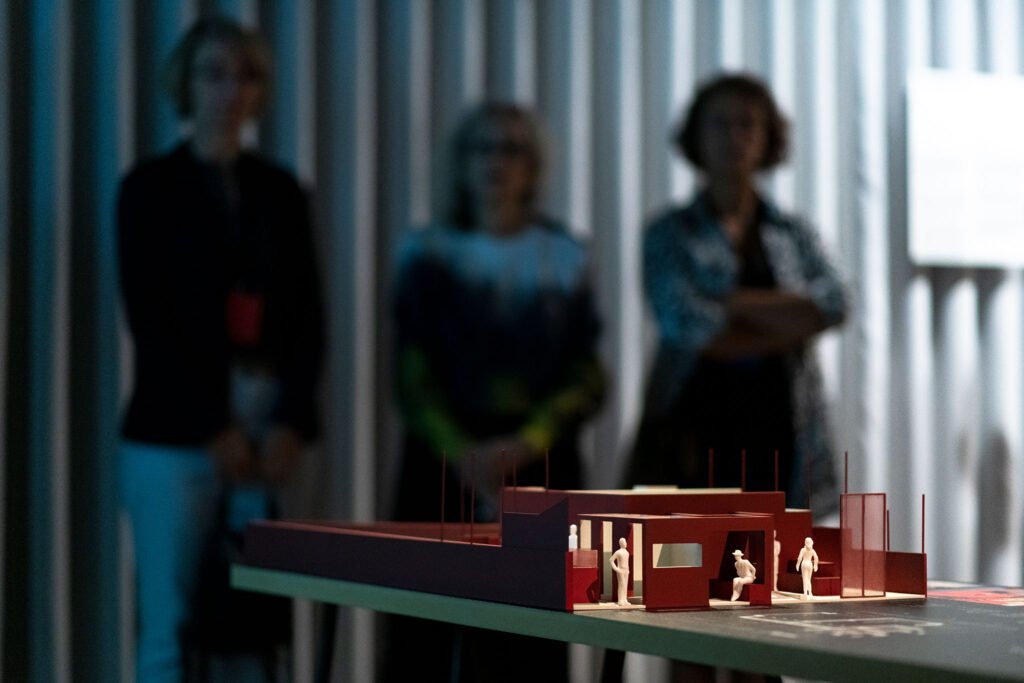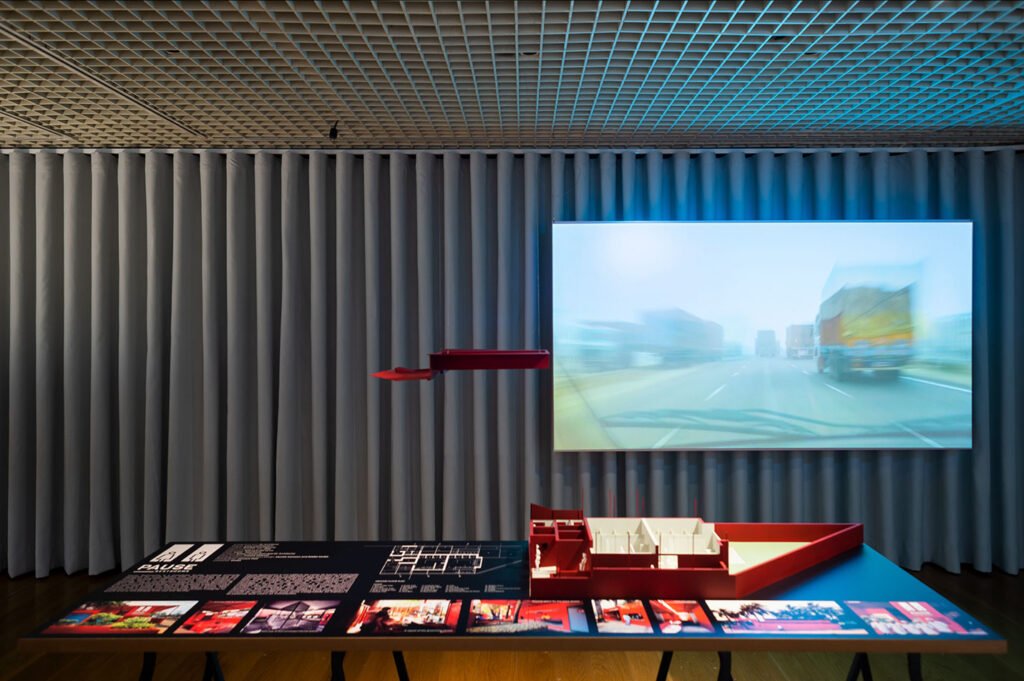
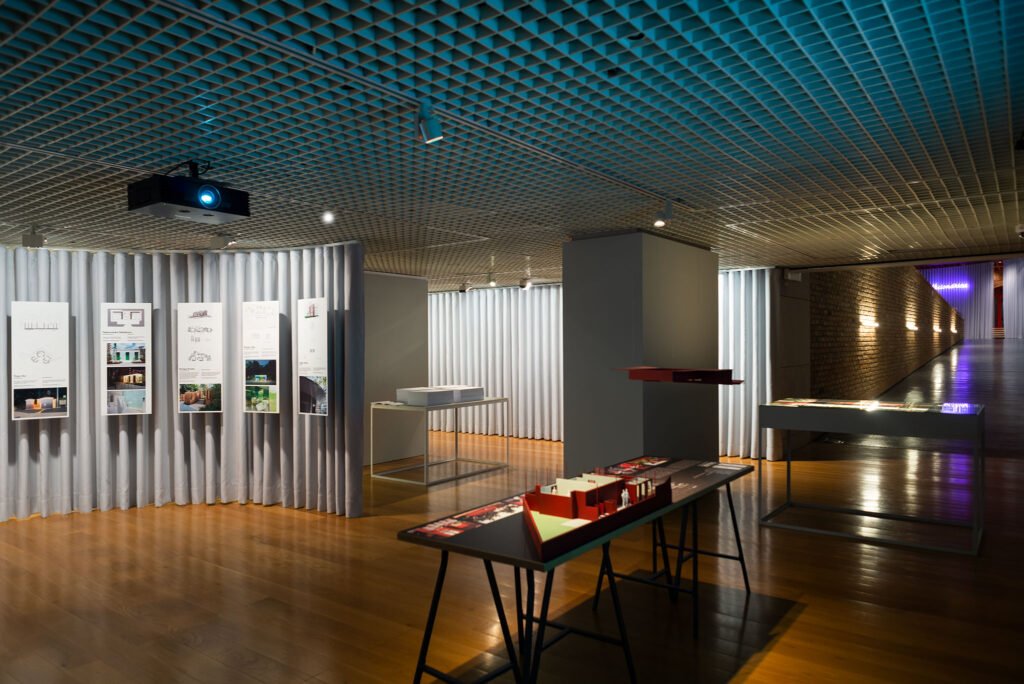
At the Lisbon Architecture Triennale 2022, Rohan Chavan’s work at Terra unfolds as part of a larger global inquiry into how architecture can respond to the urgencies of our time. Within the Visionaries exhibition, his contribution engages with the idea of intimacy in everyday spaces—those often overlooked yet deeply human environments of rest, hygiene, and care.
Set against Terra’s broader call for a shift from linear systems to more holistic, community-driven, and sustainable ways of living, his work quietly reframes architecture as a tool for dignity and resilience. Rather than spectacle, it focuses on the ordinary—suggesting that the future of architecture may lie not in grand gestures, but in rethinking the most basic spaces that shape daily life.
Reimagining Hygiene – A note from the curator – Anastassia Smirnova
In his seemingly modest prototypes for public restrooms, young indian architect Rohan Chavan addresses many issues that are central to today’s architectural discourse. Designing for the poorer classes, he tries to imagine intimate spaces that would provide security and simple comforts to those deprived of the most basic amenities in every urban block in contemporary India. His restrooms are cheap to manufacture, democratic, sustainable, ecologically sound, and, at the same time, visually engaging. He even hopes to make them function as tiny public spaces, expanding on existing customs as well as on predictions of the more universal future demands.
The traditional understanding of hygiene in India (and more generally in Asia) is rather different from what we propagate today in the West, so the RCA team is investigating possibilities to bridge different paradigms through functional architectural schemes. Despite their small scale, these public projects become educational devices of sorts, demonstrating to citizens, municipal workers, and designers that breakthrough architectural solutions can be simple, come at low costs, and still dramatically improve the quality of life in cities.