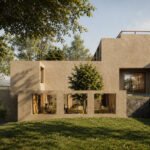
Rice Diversity Centre, Mandya
The Rice Museum was initiated in response to the rapid loss of traditional agricultural knowledge and cultural heritage due to modernization and urban development. Historically, rice has been the backbone of the local economy, diet, and way of life for generations. However, a disconnect grew between the community and its agricultural roots with technological shifts and younger generations moving away from farming.
Socially, there was an increasing concern about cultural erosion and the undervaluation of rice farmers’ contributions. Elders in the community, recognizing the fading oral traditions and rituals tied to rice cultivation, voiced a need to preserve this legacy. Additionally, environmental concerns, such as unsustainable farming practices and biodiversity loss in rice varieties, created an urgent call for awareness and education.
This architectural initiative was born from a collective vision—to create a space that not only preserves the tangible and intangible heritage of rice but also revitalizes community pride and knowledge. The museum stands as both a symbol and a tool: honoring the past while educating future generations on sustainable agricultural practices and the cultural significance of rice. Its creation was supported by local leaders, educators, and farmers, unified by the urgency to protect their heritage and promote long-term community resilience.
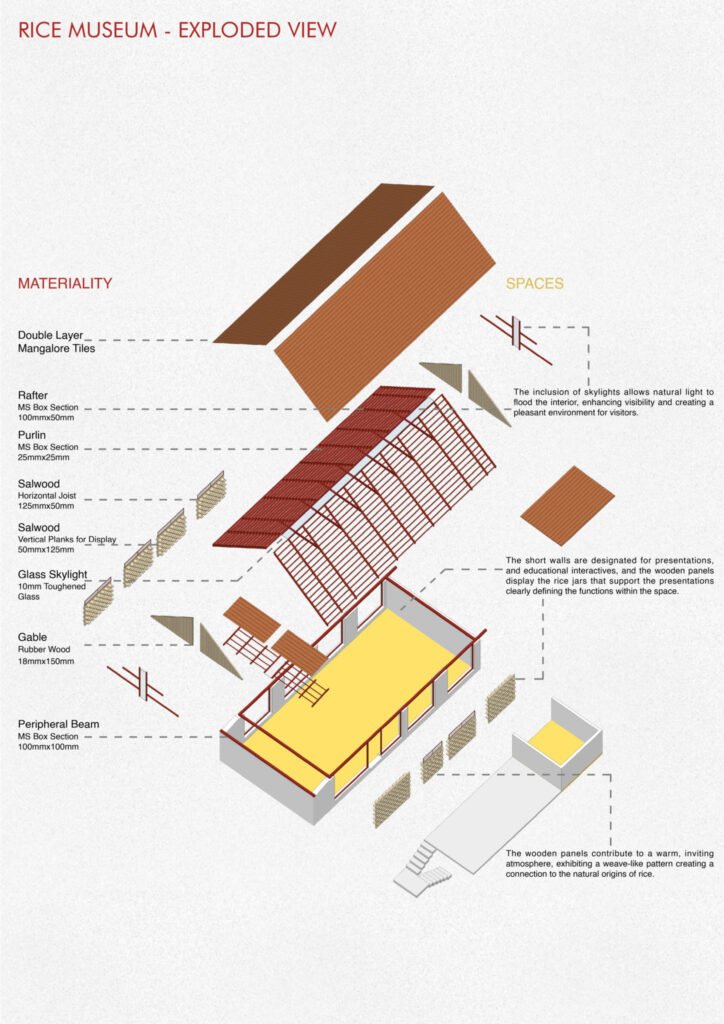
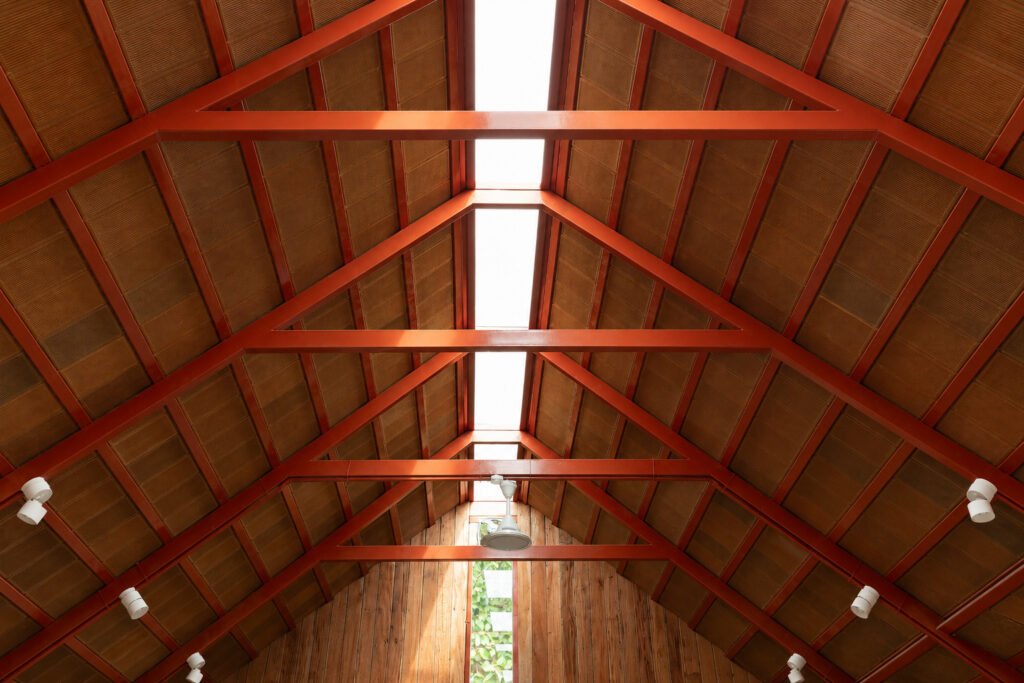
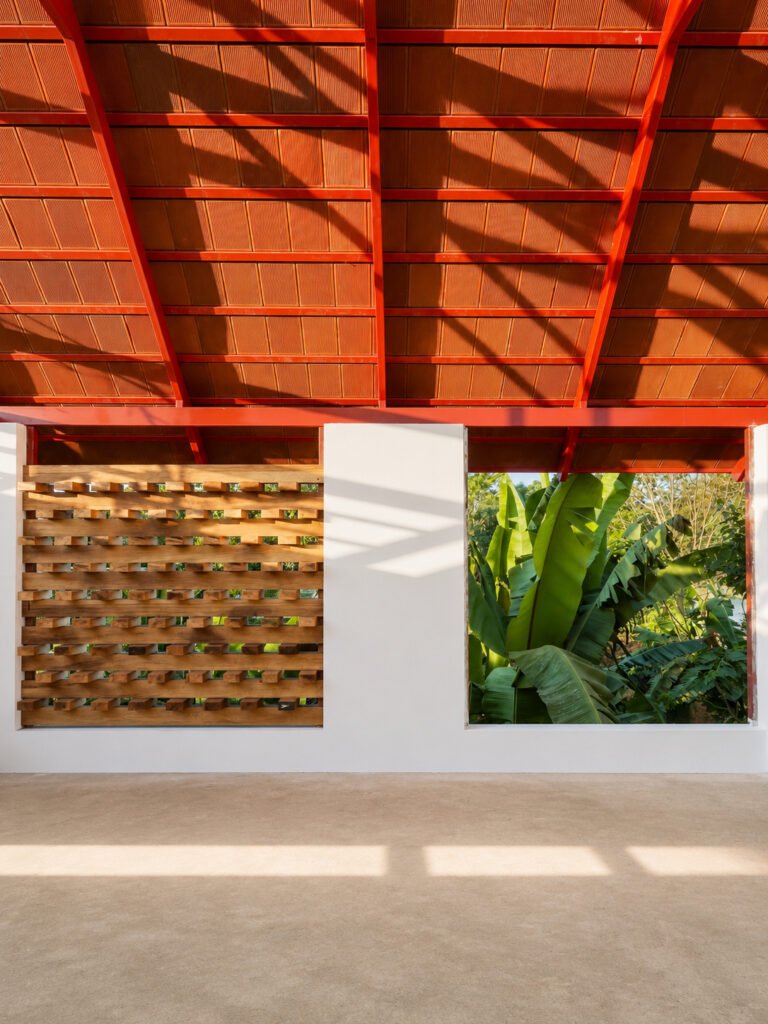
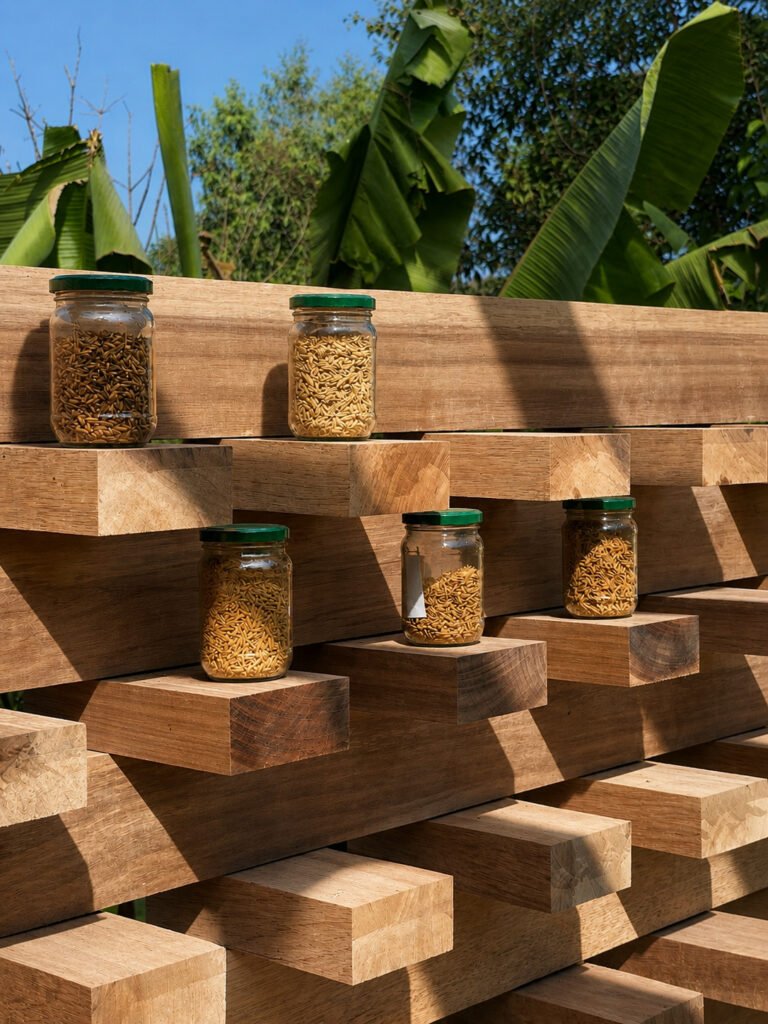
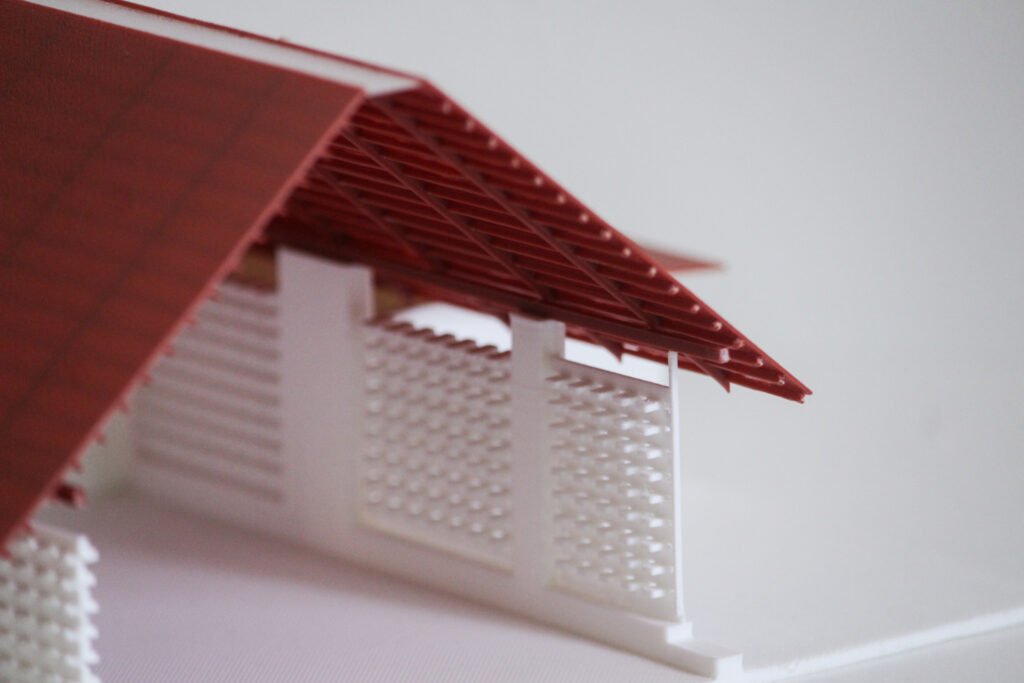
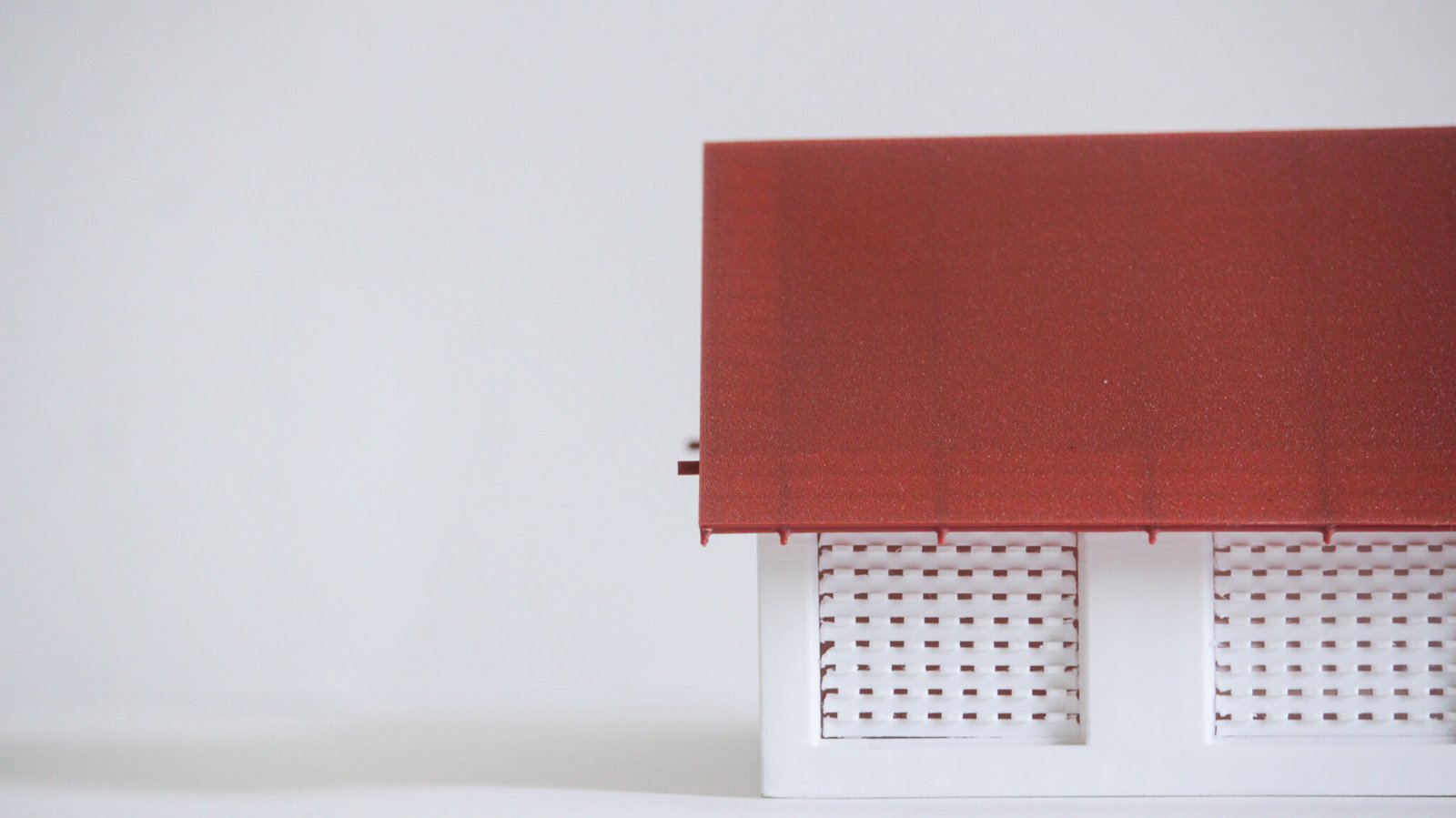
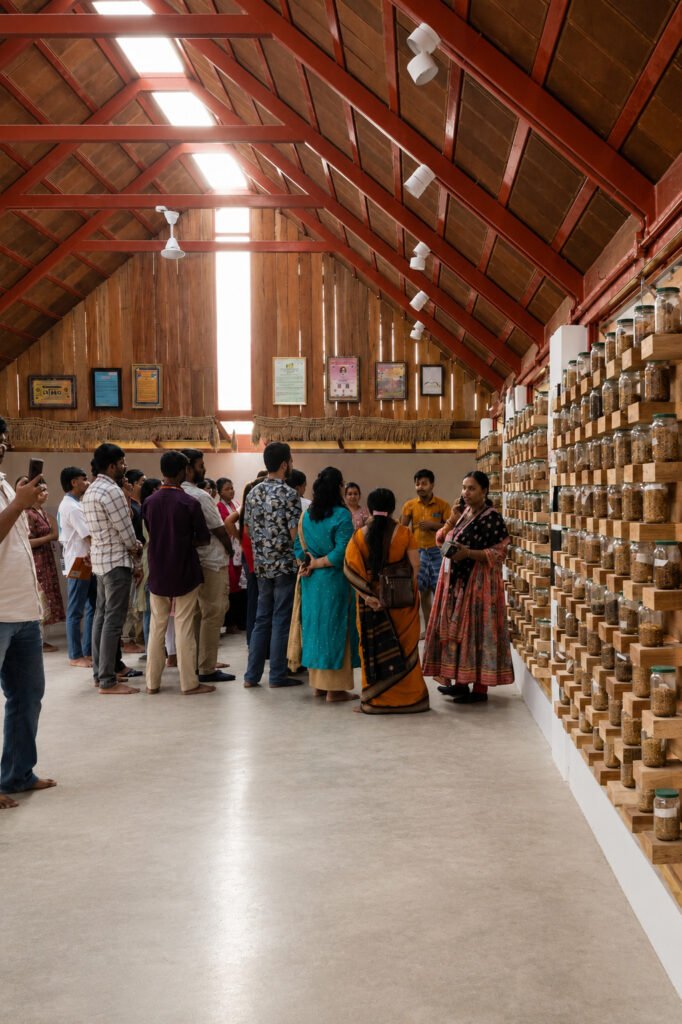
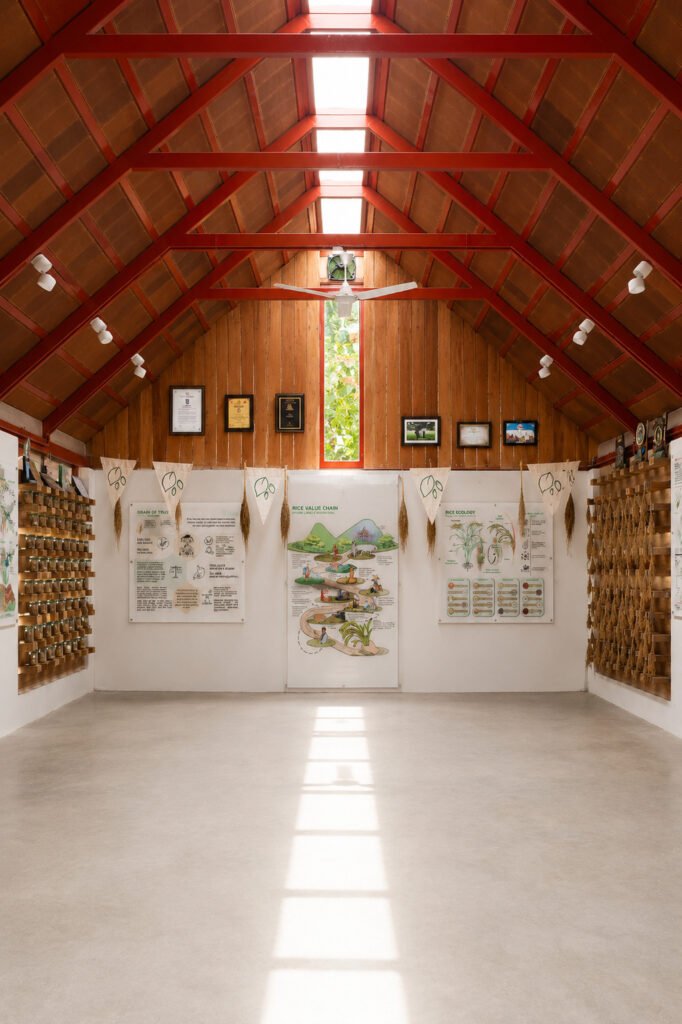
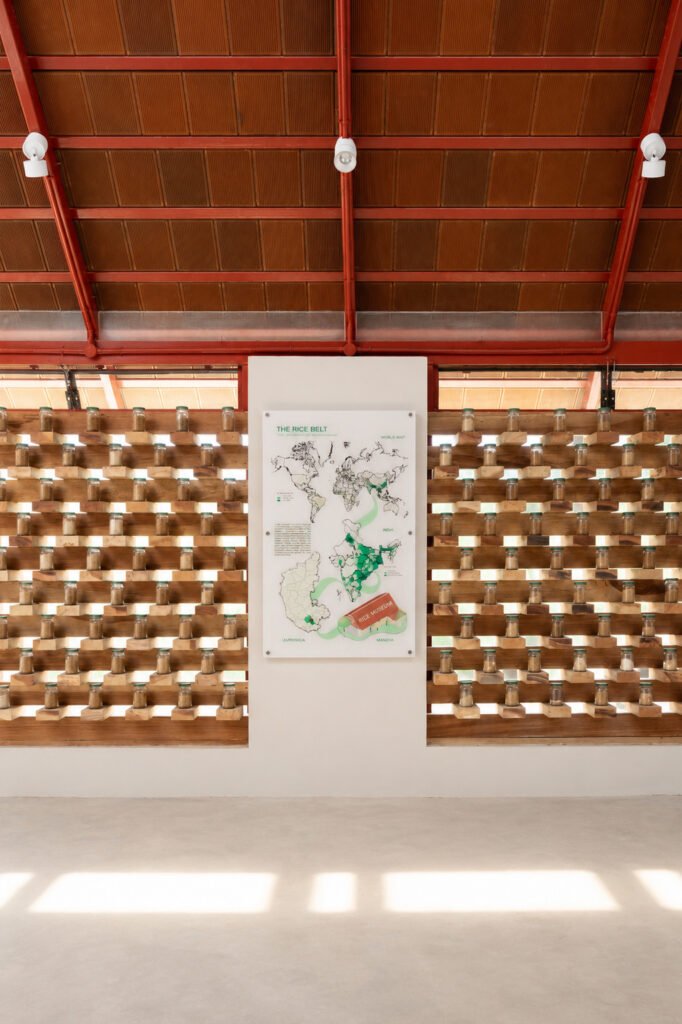
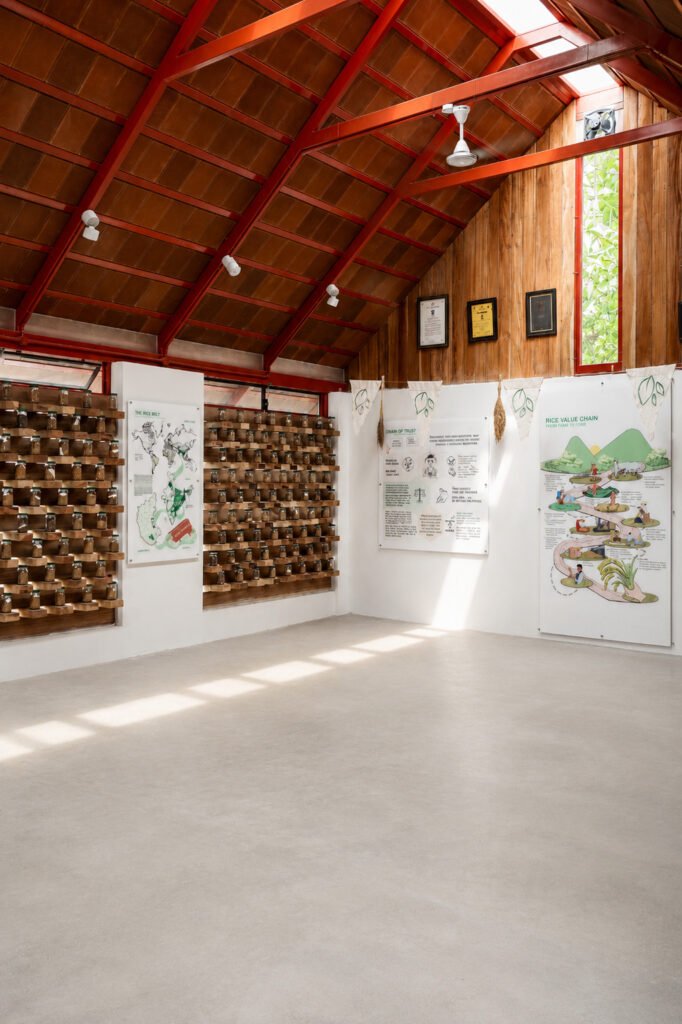
The architecture of the museum embraces simplicity and authenticity, employing natural materials such as salwood to forge an immediate, tactile connection to nature. The use of interlocking salwood display systems, mangalore tile roofing, and glass skylights highlights a design ethos centered on sustainability, passive climate control, and the celebration of vernacular building techniques. Every material and construction detail contributes to creating a serene, light-filled space that minimizes environmental impact while enhancing visitor comfort.
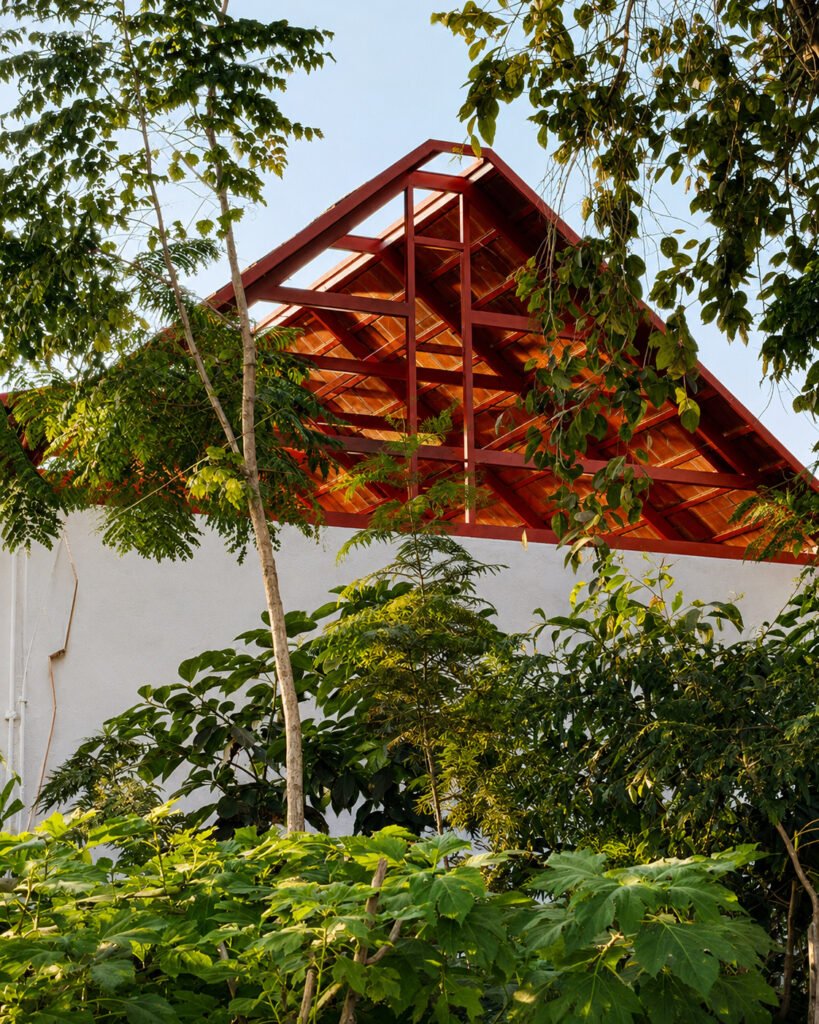
Sustainable building design through passive measures
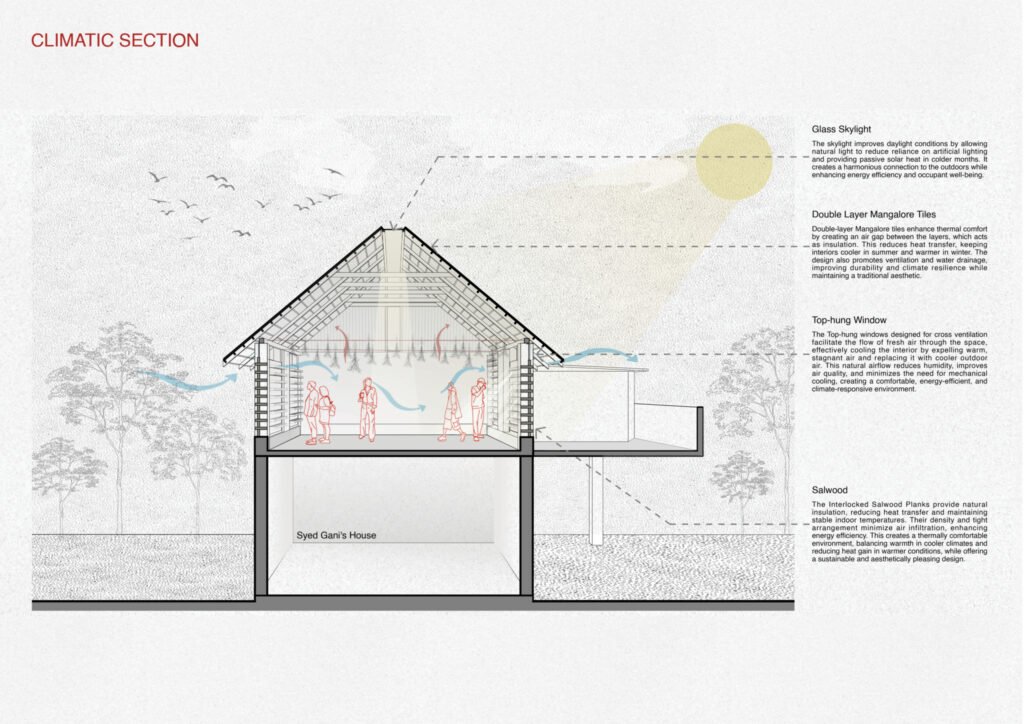
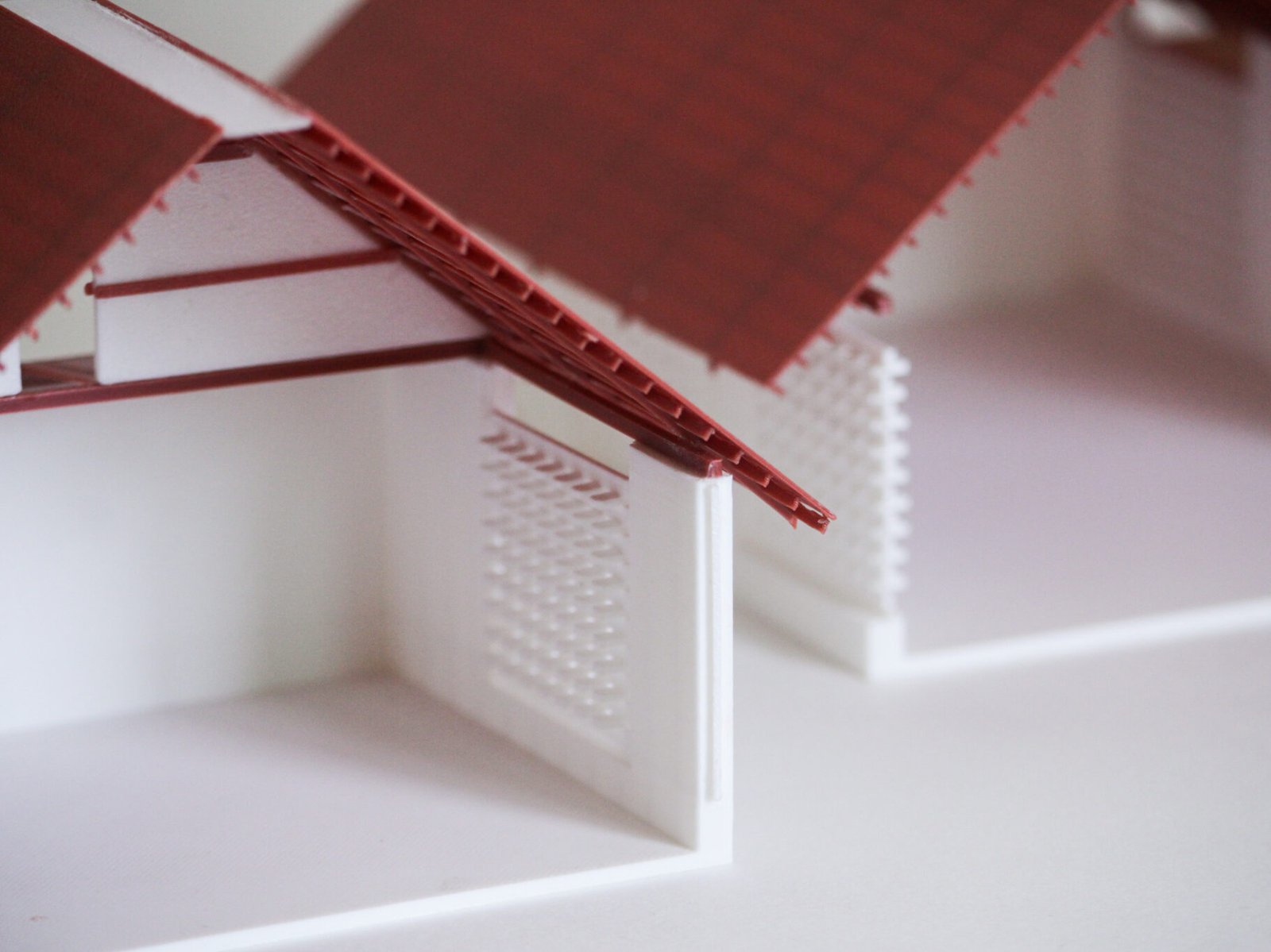
The design blends traditional and sustainable architecture to celebrate heritage while reducing its carbon footprint. The Mangalore tile roof, made from locally sourced clay, enhances the structure’s aesthetic appeal and provides natural insulation, keeping the interiors cooler in hot climates. Integrated skylights in the roof allow ample daylight to illuminate the space. The woodblock interlocking display wall adds a functional and eco-friendly character. Its open design facilitates natural ventilation and helps regulate indoor temperature, reducing dependence on air conditioning. Using locally available materials and passive climate control techniques reduces the museum’s overall carbon footprint.
Land use & Transformation
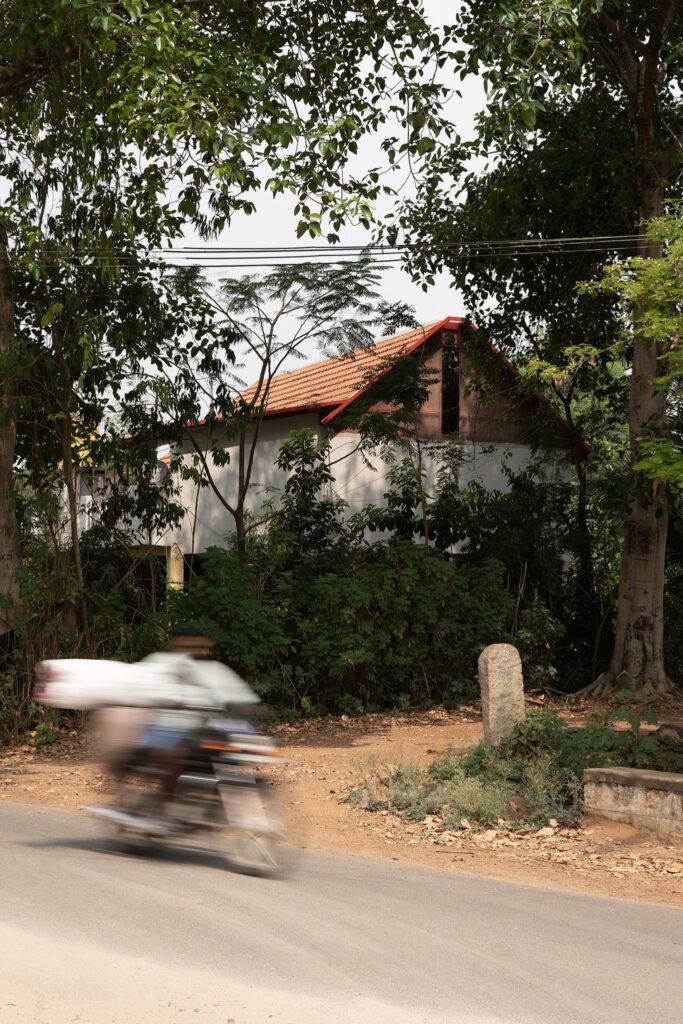
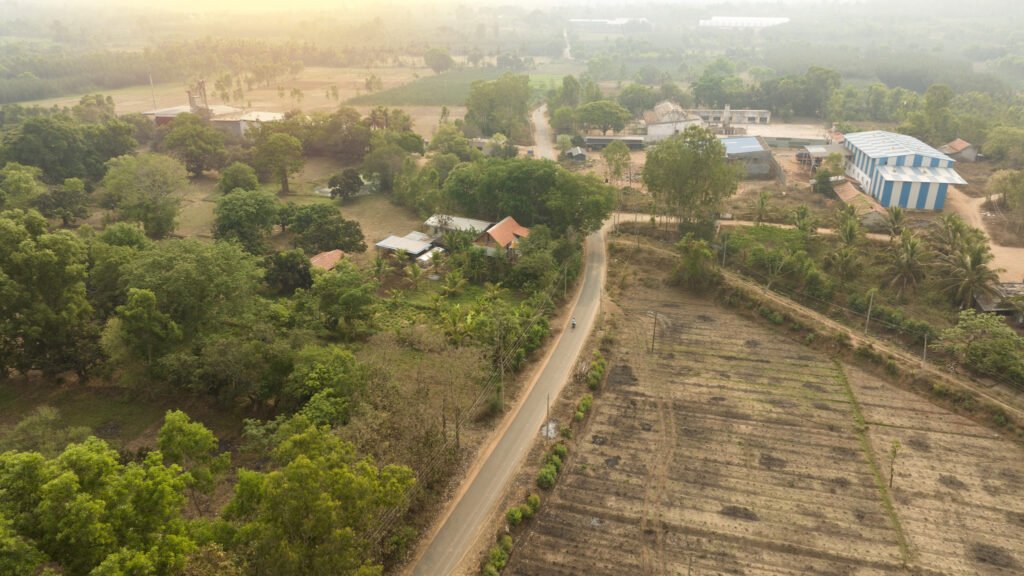
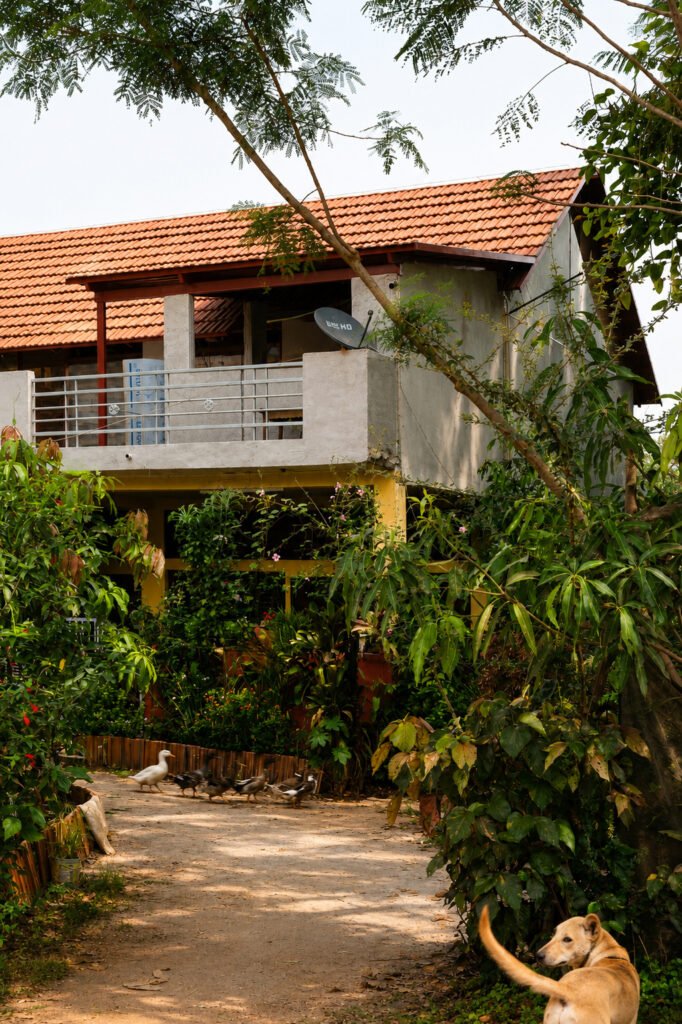
Designed to harmonize with its natural and cultural surroundings. Built on top of a farmer’s house, the structure carefully preserves the original dwelling, symbolizing the symbiosis of heritage and modernity. This approach ensures the site’s existing land-use patterns, primarily agricultural, remain undisturbed. The elevated design minimizes the building’s footprint, allowing the farmland below to remain productive and fostering sustainability. The museum’s presence also acts as a catalyst for regenerative transformation, enriching the local ecosystem and economy.
Community Impact and Resilience
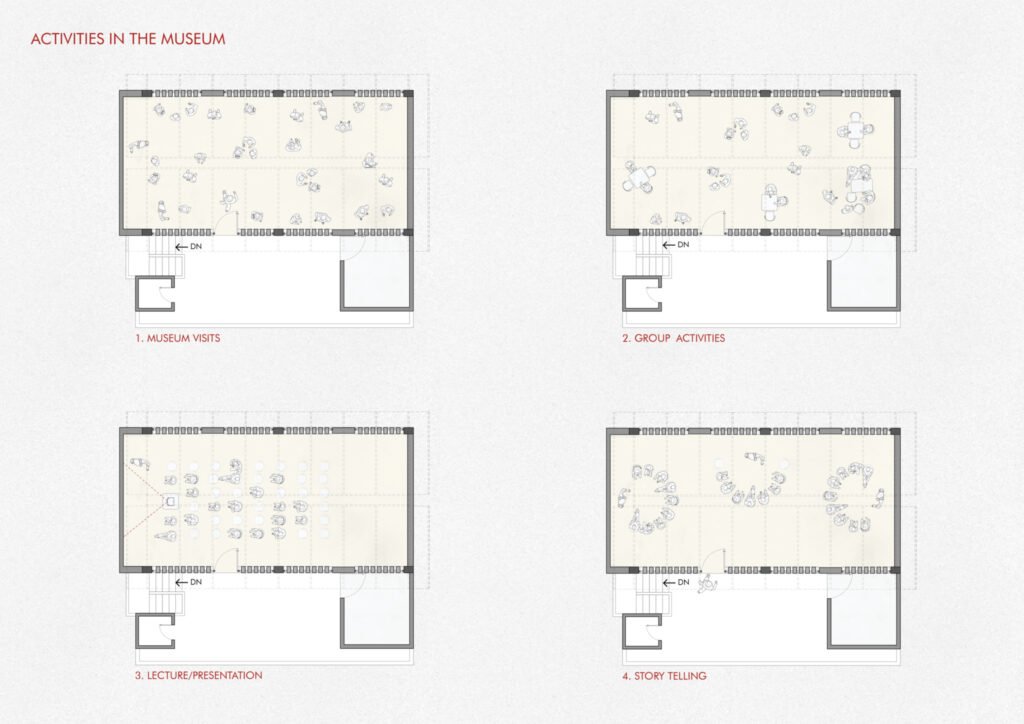
The Rice Museum fosters social fairness by celebrating the shared cultural heritage of rice cultivation, providing a space where diverse local communities feel valued and connected. Through inclusive programs, it empowers marginalized groups by offering educational resources, skill-building workshops, and opportunities for storytelling, ensuring every voice is heard. The museum strengthens community belonging by hosting festivals, art exhibits, and forums that encourage collaboration and unity. These elements create a safe, adaptive space that protects the community while inspiring collective action to address broader environmental challenges.
Aesthetic Qualities and Cultural Integration
This architectural intervention reflects the area’s agrarian roots, as rice cultivation has historically shaped its economy, traditions, and festivals. The museum’s location, nestled amid verdant paddy fields, enhances its cultural authenticity and natural beauty, making it a gateway to understanding the historical significance of rice farming. To preserve and celebrate its heritage, the design incorporates exhibits showcasing traditional tools, rituals, and stories associated with rice. The use of locally sourced materials honors the site’s ecological and cultural context. Additionally, community programs, such as workshops and festivals, foster engagement, ensuring the museum remains a living, evolving space.