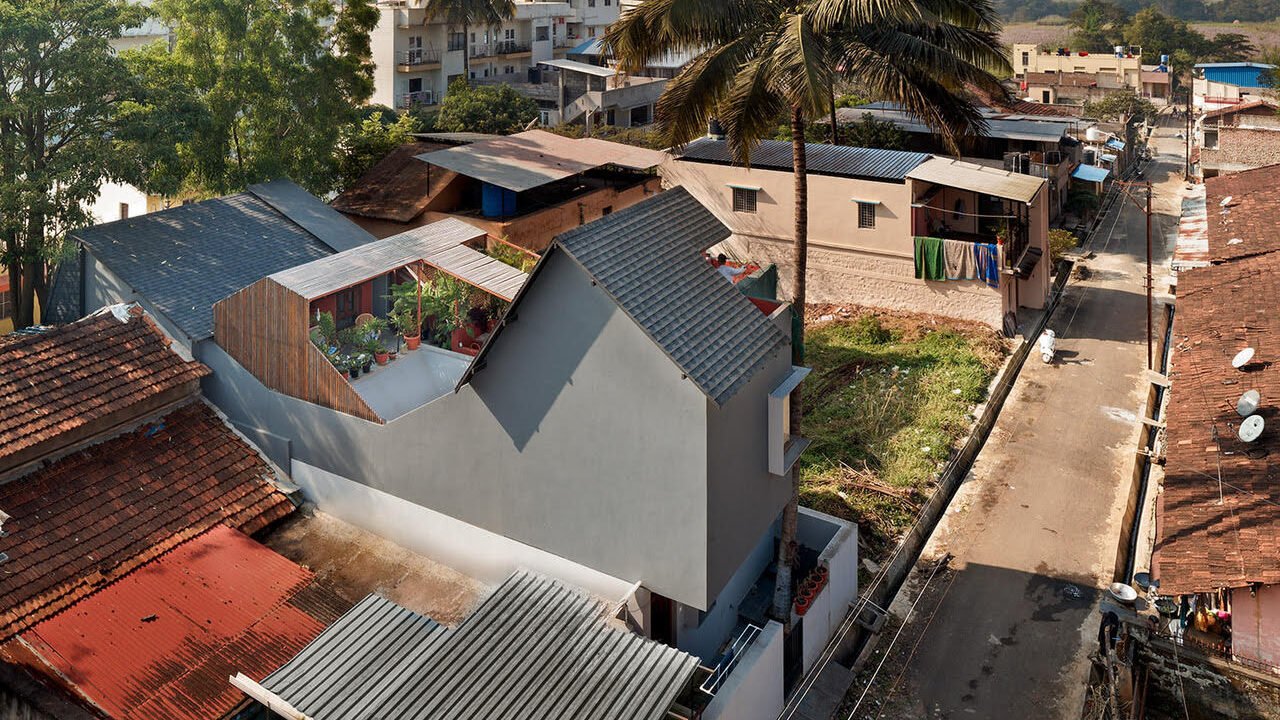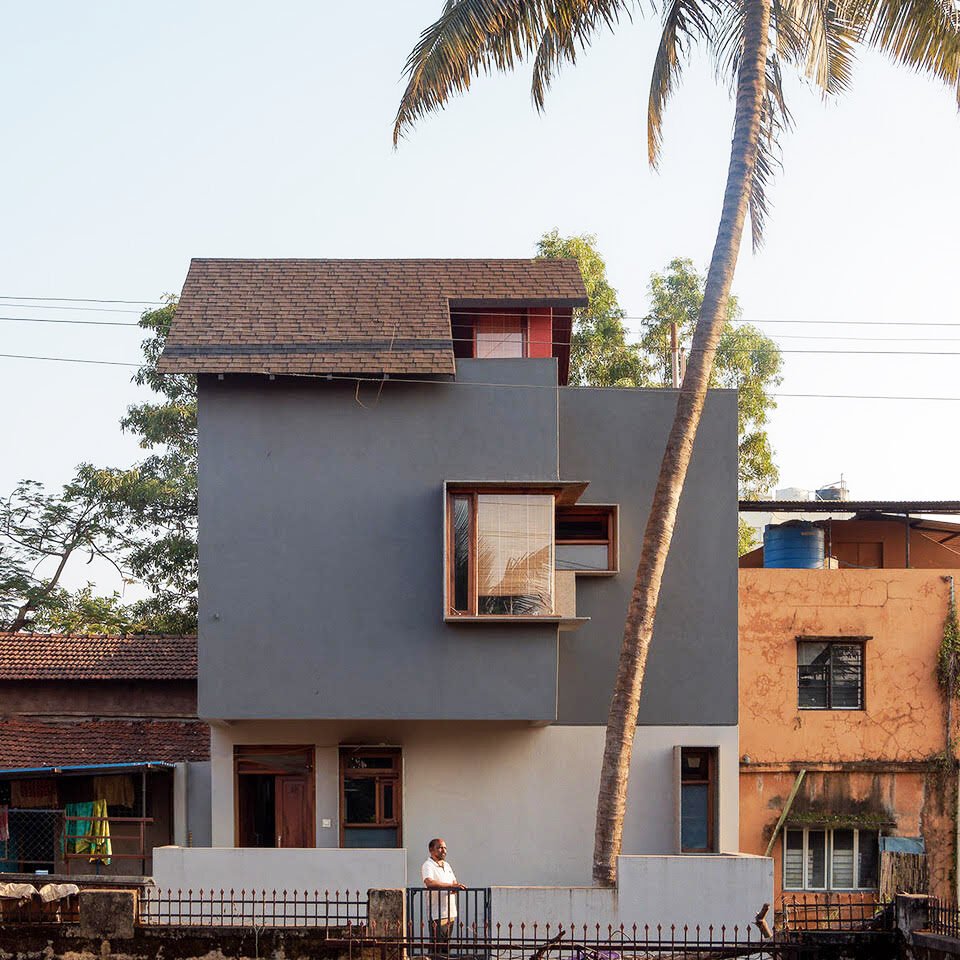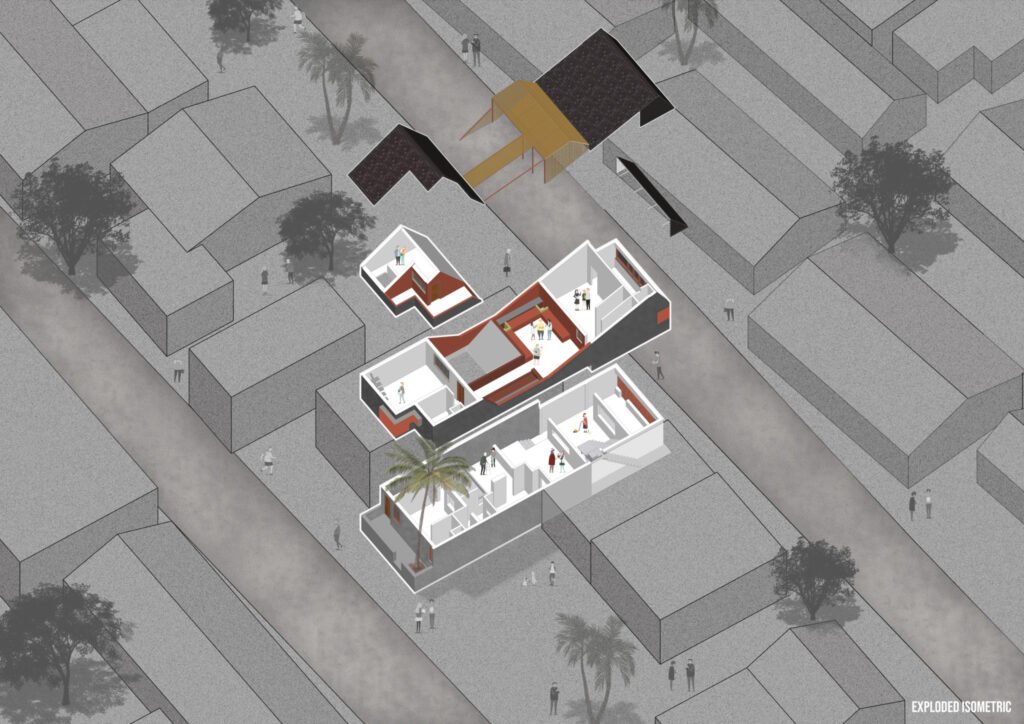
Set in a tight neighborhood, the site for ‘House with Different Roofs’ offers a unique context set in a semi-urban environment. The longer sides of the site are trapped between the neighboring houses, while the shorter sides are lined with two parallel streets that allow provision for light and ventilation for the house, and an opportunity to create a thoroughfare within the house.
The Vision of the project was to ensure maximum availability of natural light and ventilation to the house without disrupting the privacy of its inhabitants. It also minimises dependence on artificial resources for ventilation and creates spaces that serve more than one user group and more than one activity.
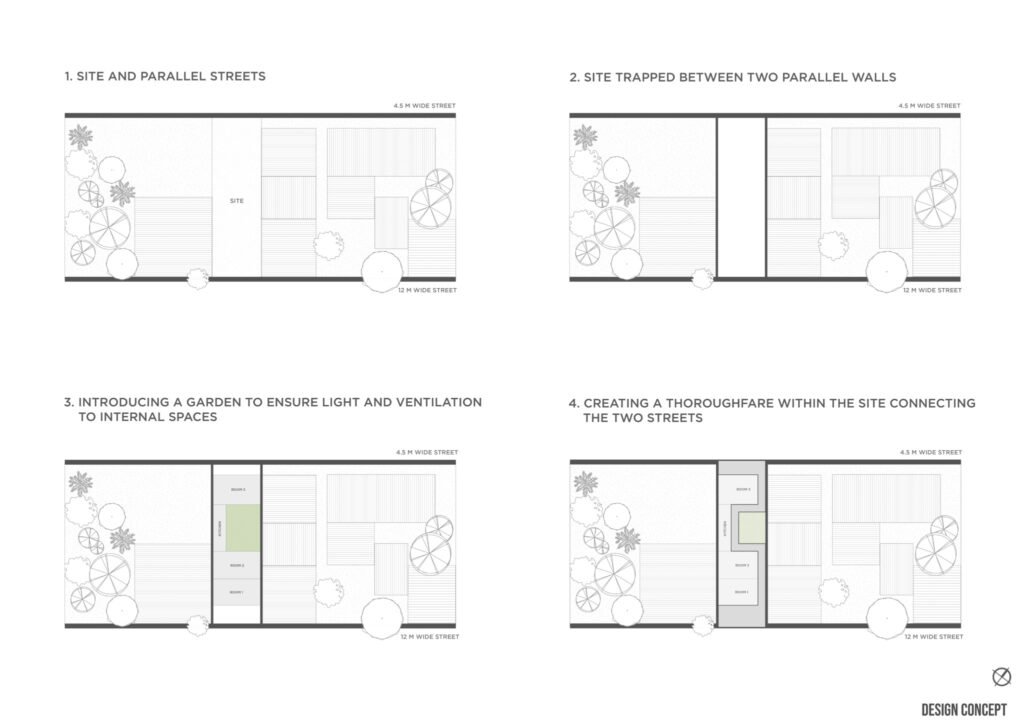
Concept
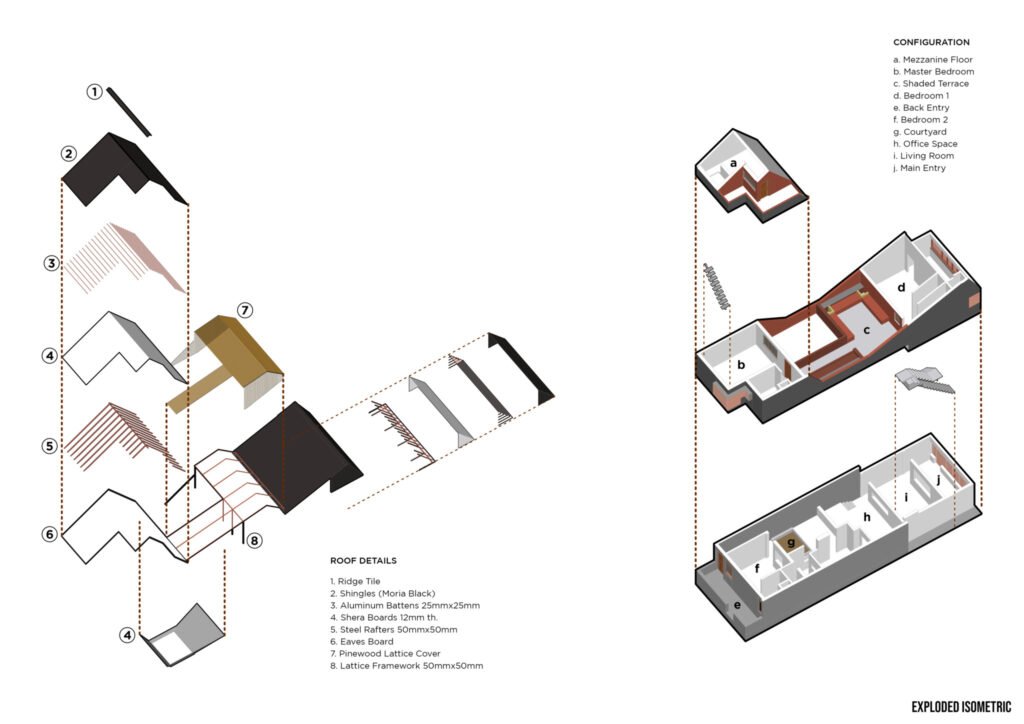
As the name suggests, House with Different Roofs makes use of four different roofs, each rendering a unique spatial experience. The roofs consist of skylights that draw in fresh air and passive natural lighting for the entire house. In addition to the protection from the environment and noise. The roof also creates a playful spatial experience within and around it.
The design is captured between two parallel walls on the longer side and streets on the shorter sides of the site. It draws the maximum amount of light from its central core and houses all the common spaces around it, pushing most of the built towards the edges. The house operates around the idea of a room and a garden; each room is attached to a garden. The garden, in conjunction with the room, maximises the spillover of the activities at different times of the day and creates spaces with permutations of use within the house.
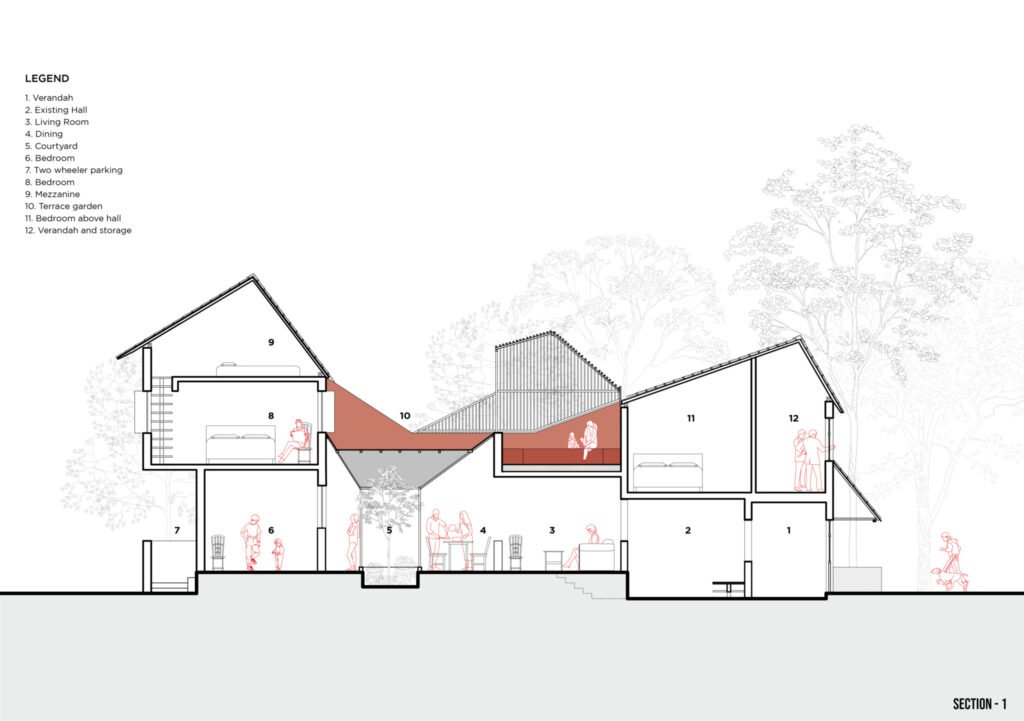
Spaces
On the ground floor, one enters the house through a porous yet covered verandah that overlooks the street. It allows an ample amount of natural light, which further seeps into the existing hall adjacent to it that is lined with a staircase that leads to the first floor.
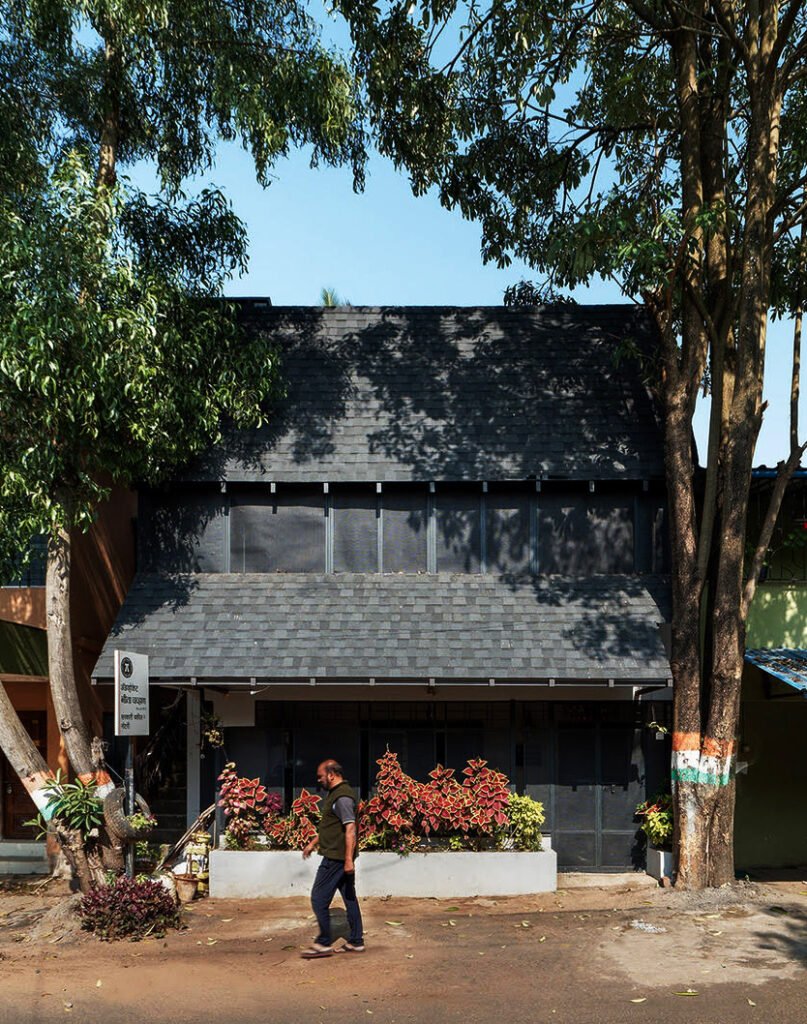
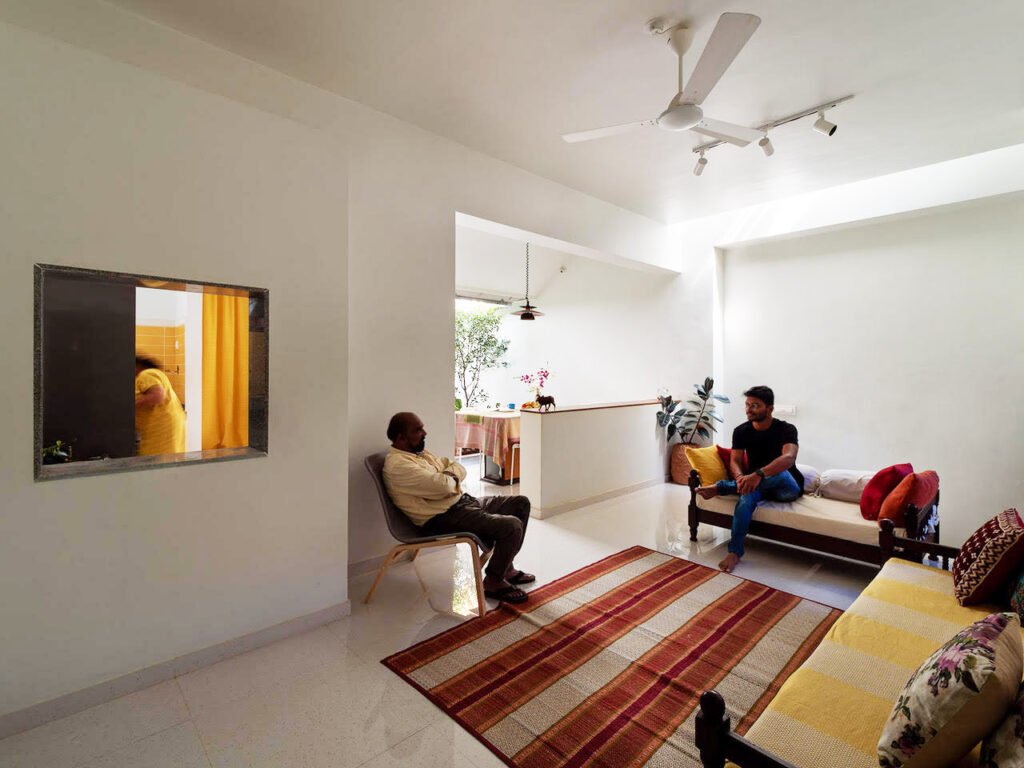
As one makes their way further into the house, they are met with the light from the overhead skylight and a glimpse of the garden ahead. The living room, trapped between the outer shared walls, takes maximum advantage of the other two sides, one looking into the existing hall through a window and the other turning into a half wall overlooking the dining area and the garden beyond. The kitchen is located opposite the dining area and is bound by an outer wall on one side and is open on the other side, with a utility and a common toilet.
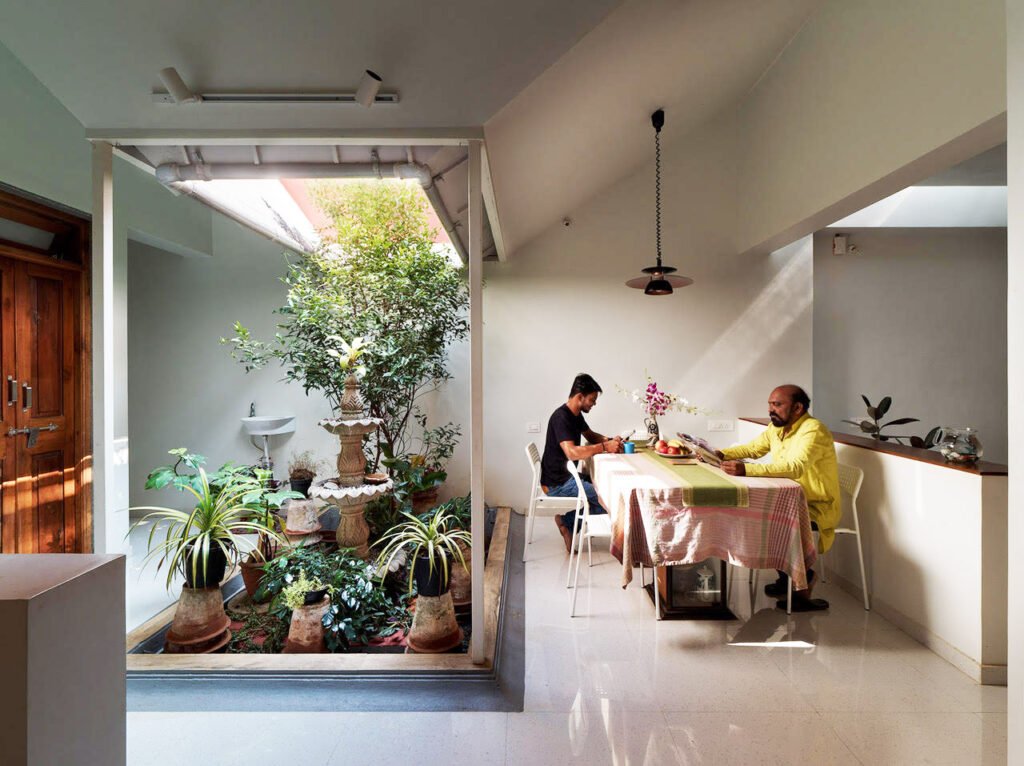
The common garden is surrounded by the living room, the kitchen, and the bedroom, and is utilized for various activities throughout the day. It also plays a very important role in providing abundant light and ventilation for the entire house. The bedroom, with its private toilet, has openings on opposite walls facilitating cross ventilation and opens into a private garden.
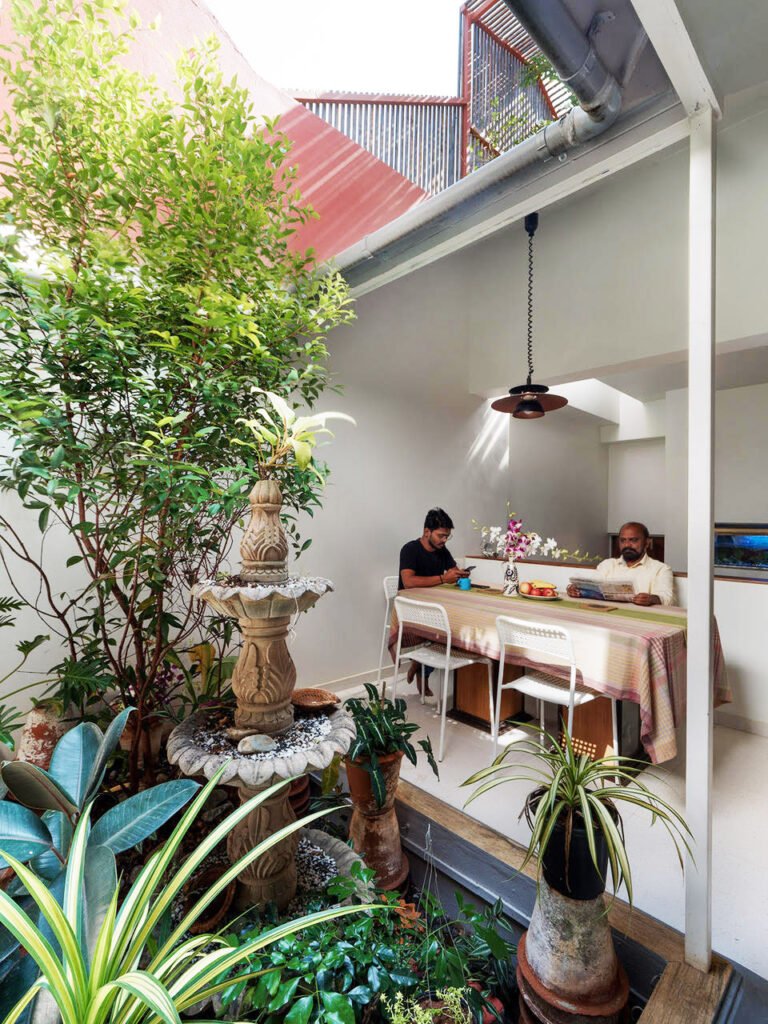
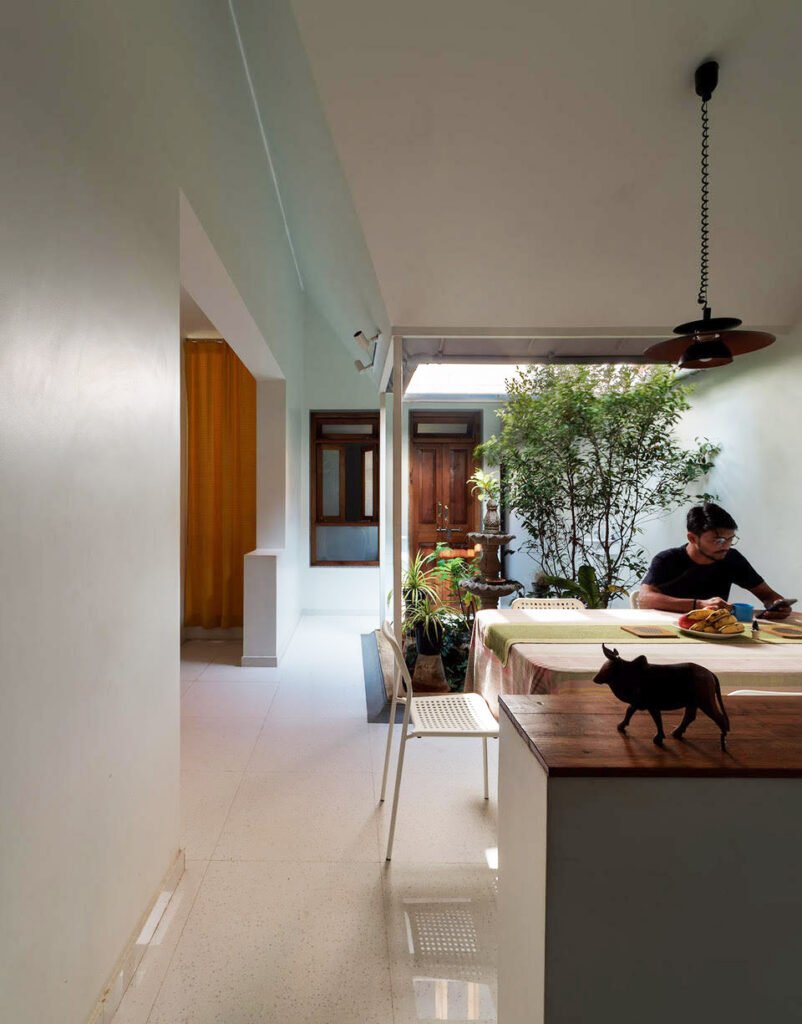
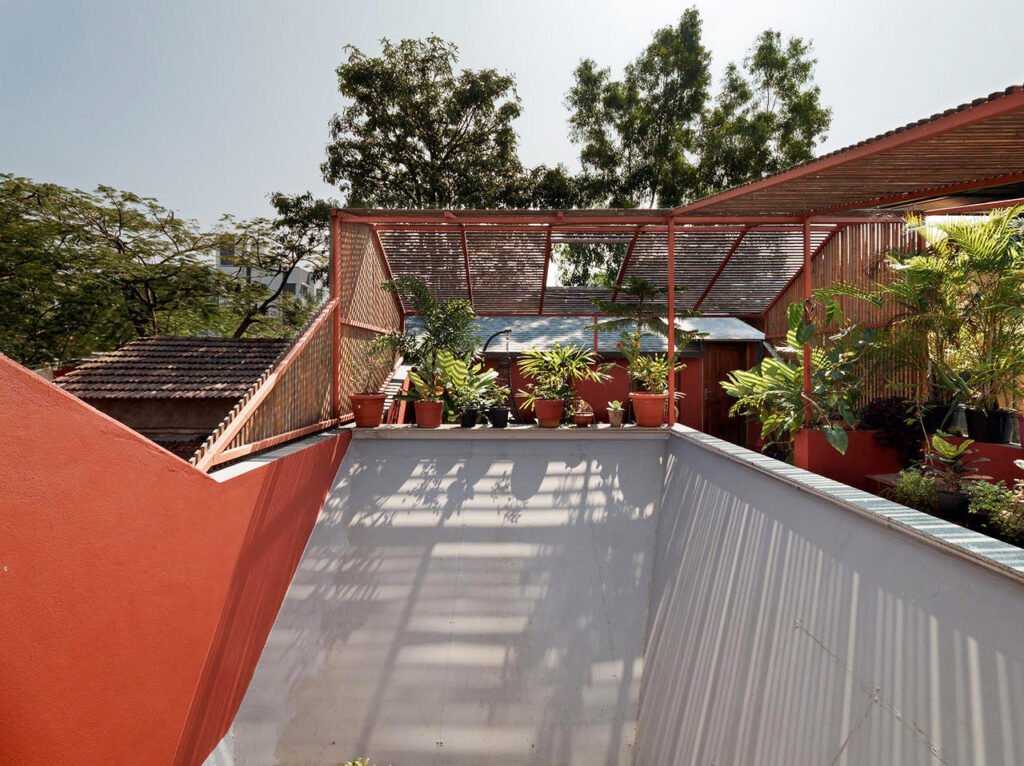
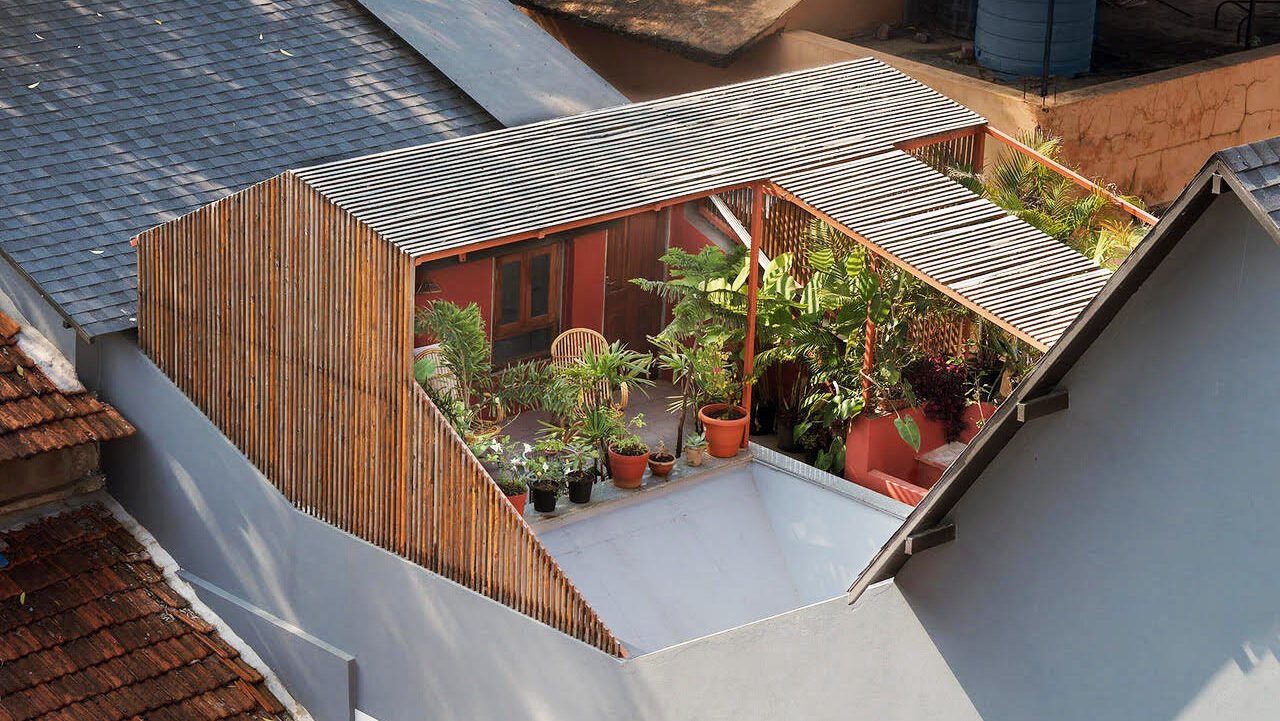
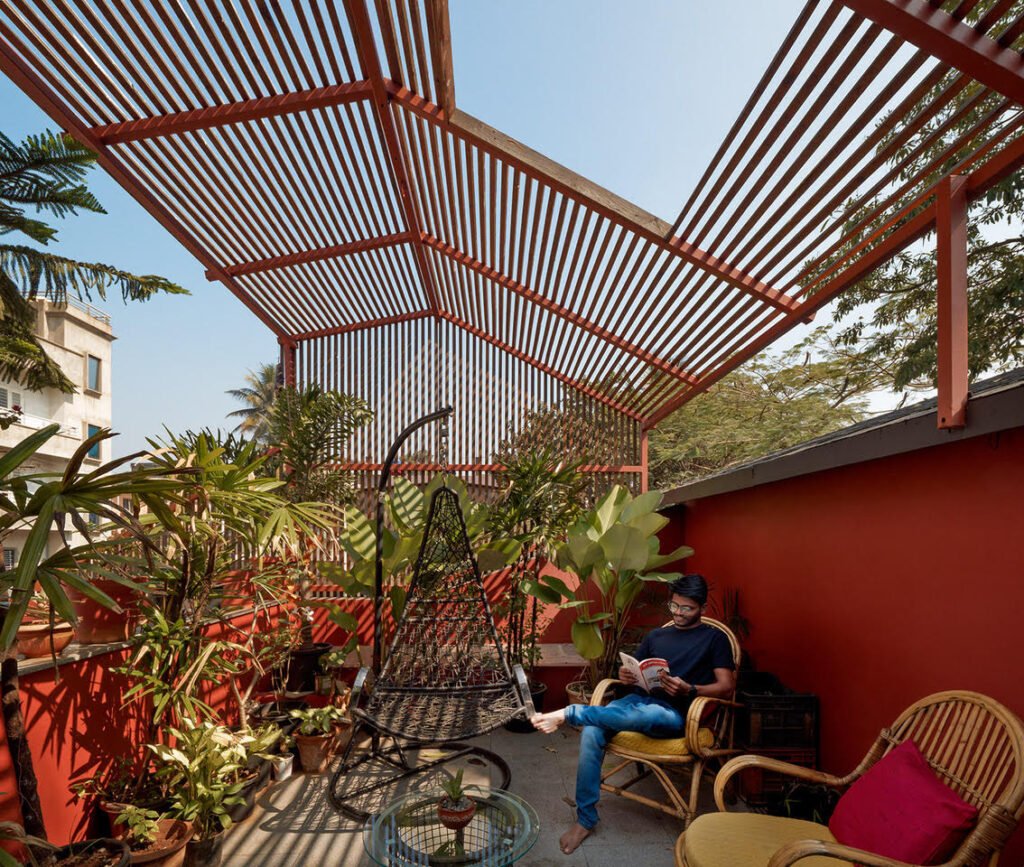
The first floor consists of two bedrooms connected by a common terrace. The common terrace starts as a semi-covered space topped by a pinewood lattice cover, creating an intriguing volume where users can sit together along the benches or use it as a space for congregation. This space is followed by an open-to-sky terrace, lined with planters and overlooking the garden on the ground floor. Considering the harsh direct sunlight that the terrace receives, the walls of the terrace are painted tan red to minimize glare and make it a comfortable space to inhabit.
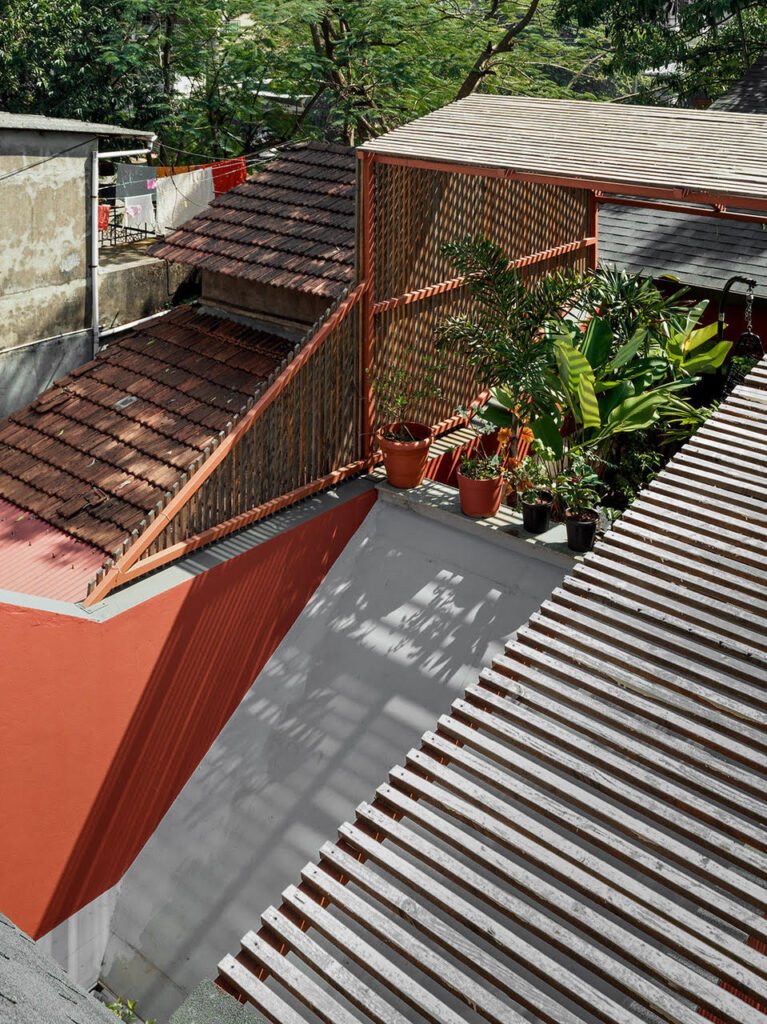
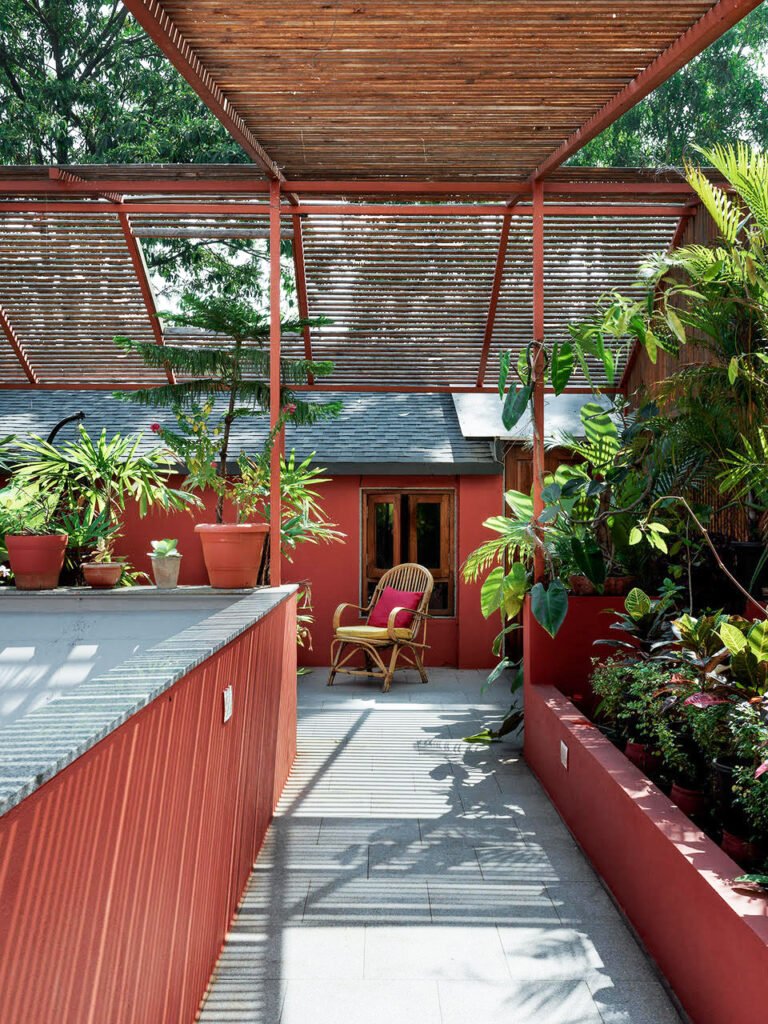
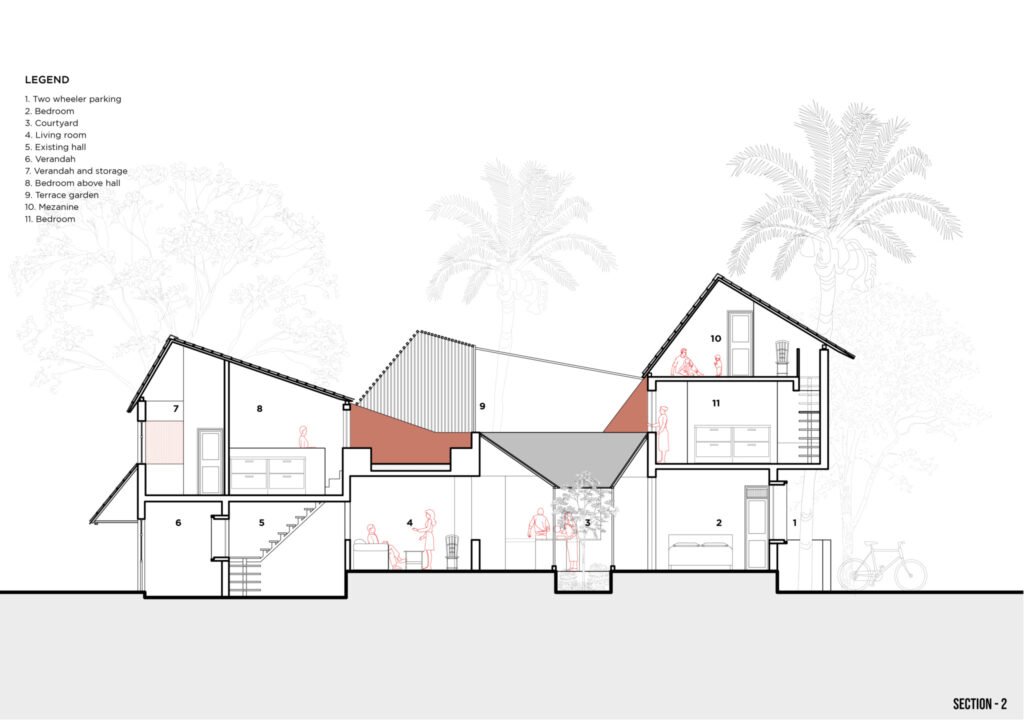
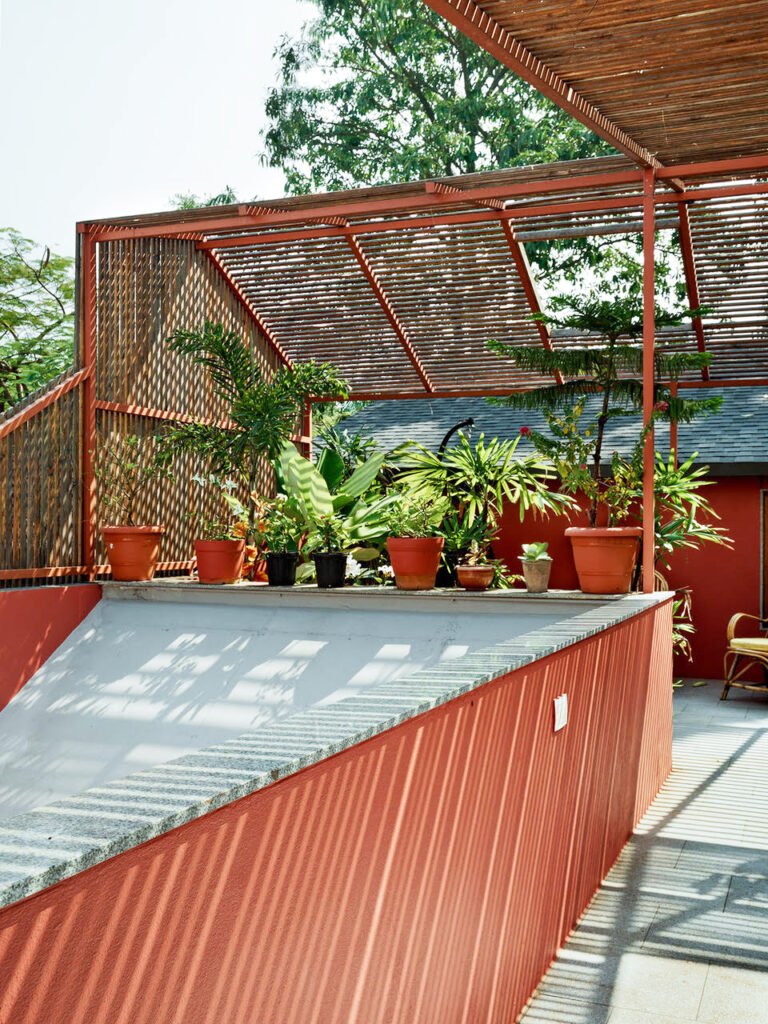
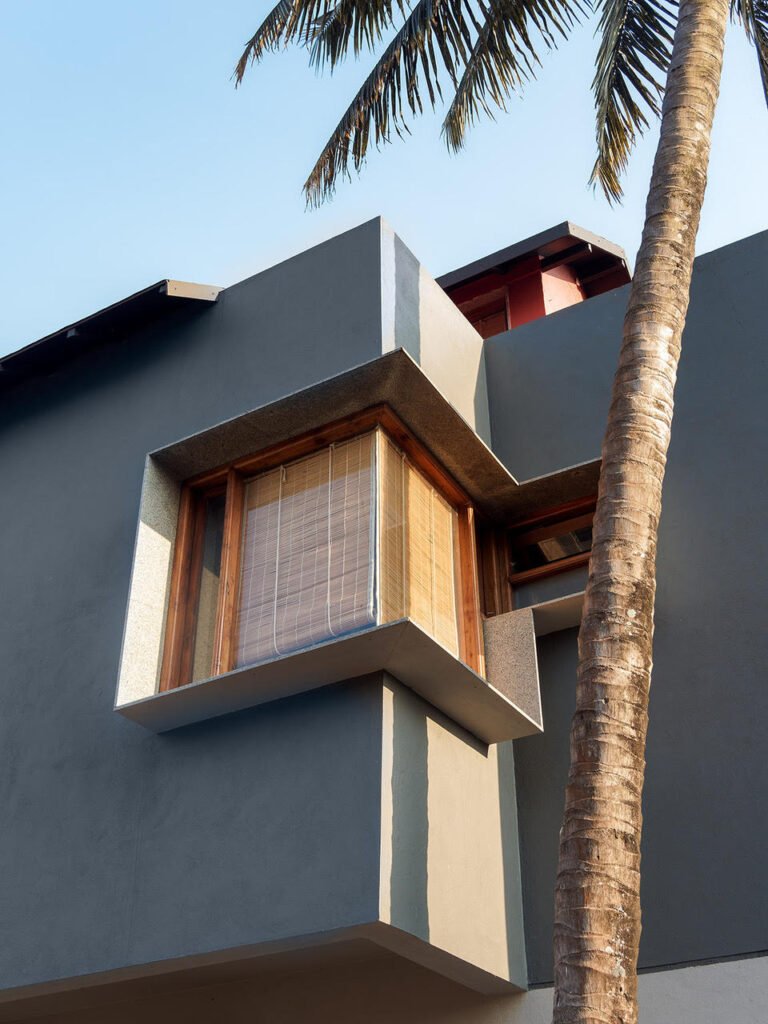
The terrace terminates at the second bedroom, which has a view of two gardens – the ground floor garden and the private lattice roof garden, in addition to a view of the rear street through a corner window.